
Commercial
Commercial Roof Replacement in Sarasota, FL
When a commercial roof reaches end of life, replacement protects your building, your tenants, and your investment. We coordinate the full scope — assessment, system specification, permitting, installation, and inspection — without disrupting your operations.
How We Work
Commercial Replacement in Southwest Florida
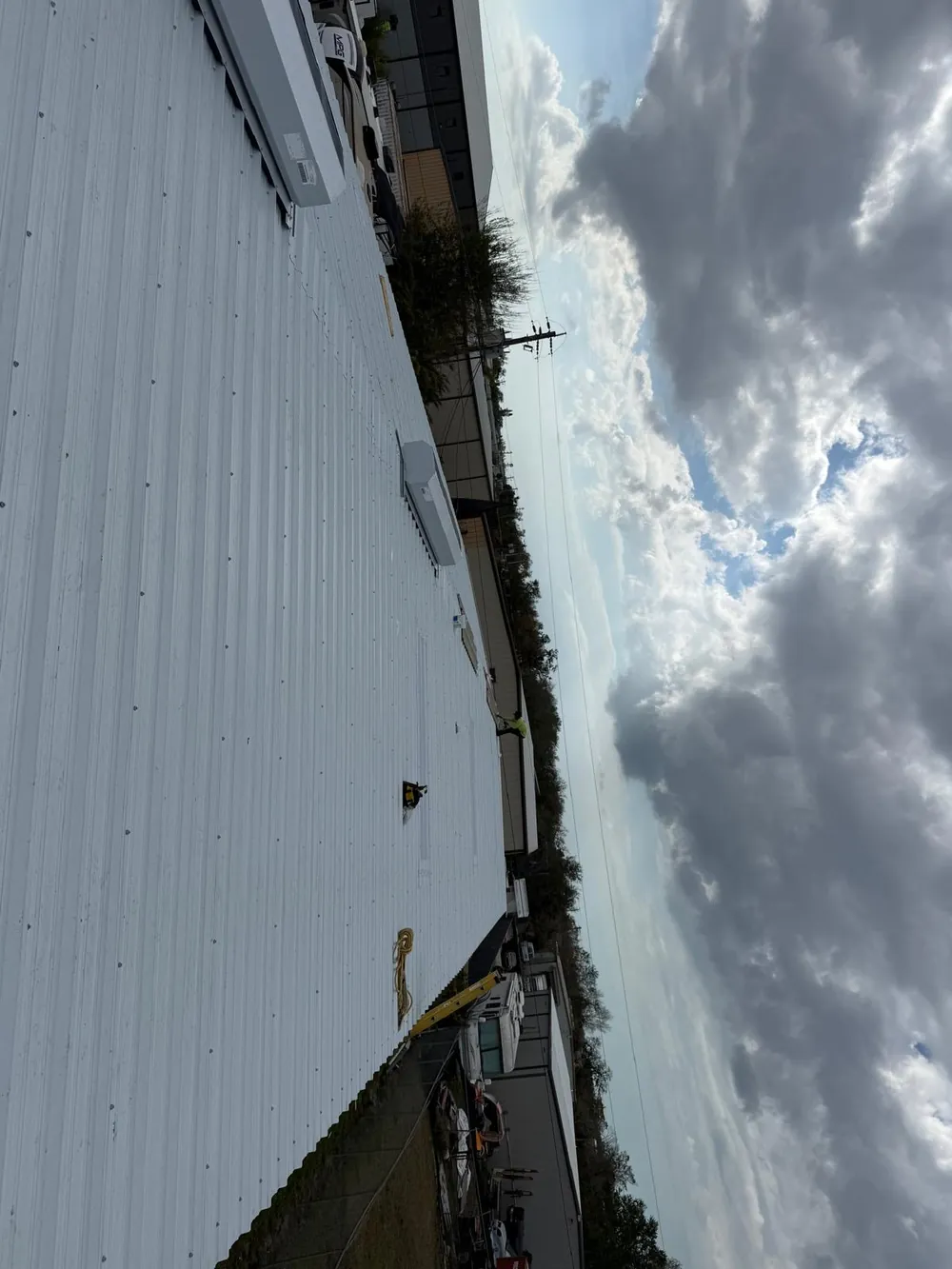
Commercial Roof Replacement Built for 20+ Years of Service
Commercial roof replacement is a capital project that deserves the same rigor as any major building investment. The system you choose, the insulation package under it, and the installer you hire all determine whether you're looking at a 15-year or a 30-year service life on the new roof.
We approach every commercial replacement with the same five-step process: full assessment, system specification, permitted installation, milestone inspections, and complete warranty documentation. No subcontracted crews, no surprises mid-project, and no shortcuts that show up as leaks two years later.
For Sarasota and Manatee County property owners — retail strip centers, office buildings, light industrial, medical facilities, multi-tenant complexes — we handle the full scope from tear-off to manufacturer warranty registration. Phased work for occupied buildings is standard, not an upcharge.
- Full Tear-OffWhen RequiredWet insulation removed, never layered over
- NDLManufacturer WarrantiesNo Dollar Limit coverage on qualifying systems
- PhasedOccupied BuildingsWatertight throughout — no operations stop
- EngineeredPermitting DocumentationRequired for all FL commercial reroofs
- Energy CodeR-Value ComplianceCurrent Florida insulation requirements
- 15 YearWorkmanship WarrantyOn top of manufacturer material warranty
Assessment First — We Don't Quote Replacement Blind
Every commercial replacement project starts with a complete assessment of the existing roof. Core cuts at sample locations expose insulation condition layer by layer — we see whether moisture has penetrated, whether the deck below is sound, and how many layers exist on top of the structural deck. Infrared scanning is used on larger buildings where widespread moisture is suspected — wet insulation shows up as thermal anomalies the day after sundown.
The reason this matters: wet insulation that gets covered by a new membrane continues degrading underneath the new roof, eventually destroying the warranty and the substrate. Property owners who reroof over wet insulation typically pay twice — once for the failed reroof and again for the proper tear-off five to eight years later.
We document everything: photos of every core, infrared scan output, deck condition notes, drainage analysis, and a written scope that maps repairs to specific roof zones. Property managers and insurance adjusters get the documentation they need without chasing us for it.
Insurance claim for storm damage? We document everything in the format adjusters expect — line-item scope that matches their estimates and photo support for every claim element.
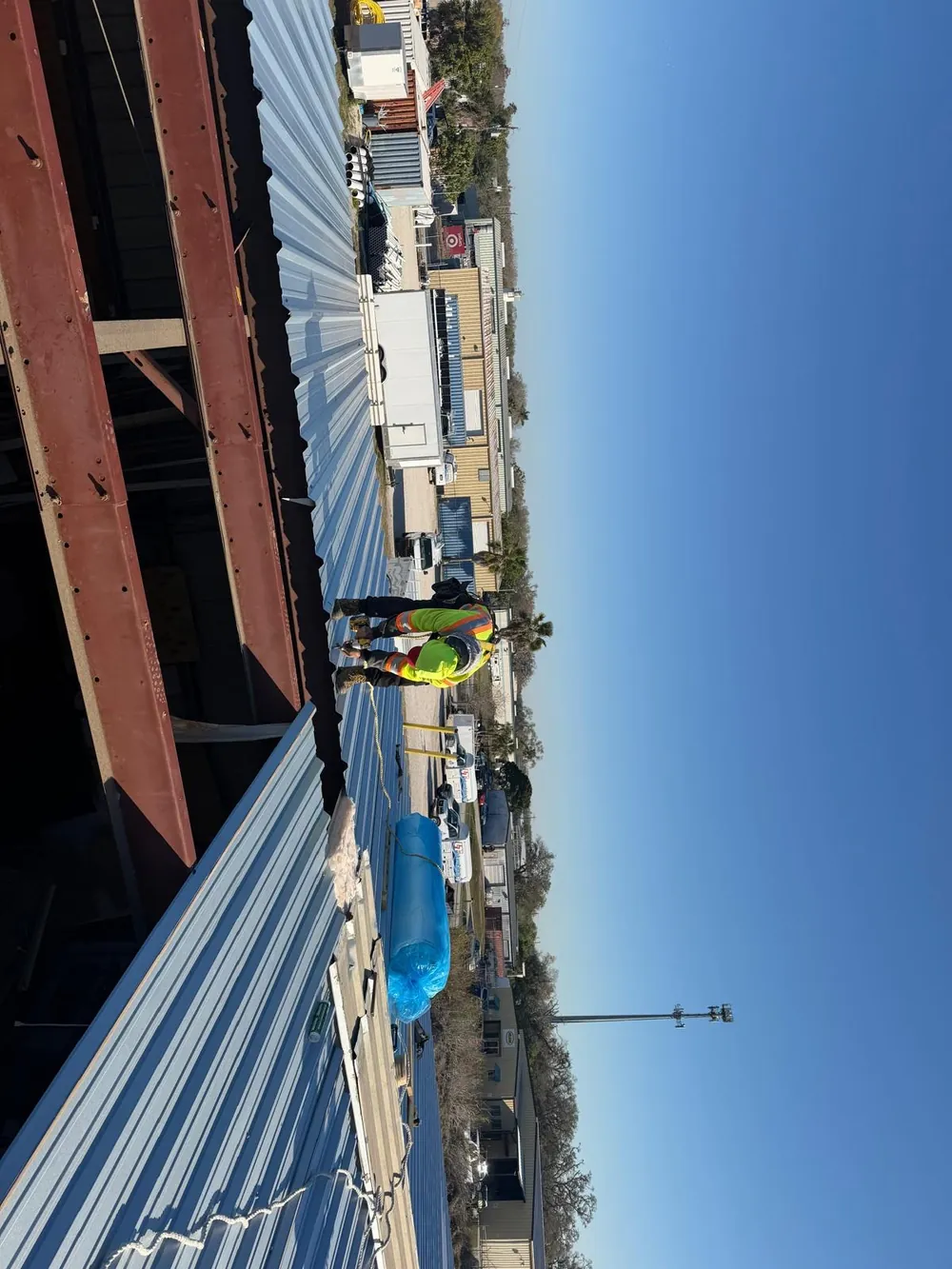
System Selection — TPO, Modified Bitumen, Metal & EPDM
System choice for commercial replacement depends on building type, roof slope, budget, warranty target, and planned ownership duration. The honest answer is rarely just one system — most Sarasota commercial buildings have two or three viable options and the right choice depends on what the owner is optimizing for.
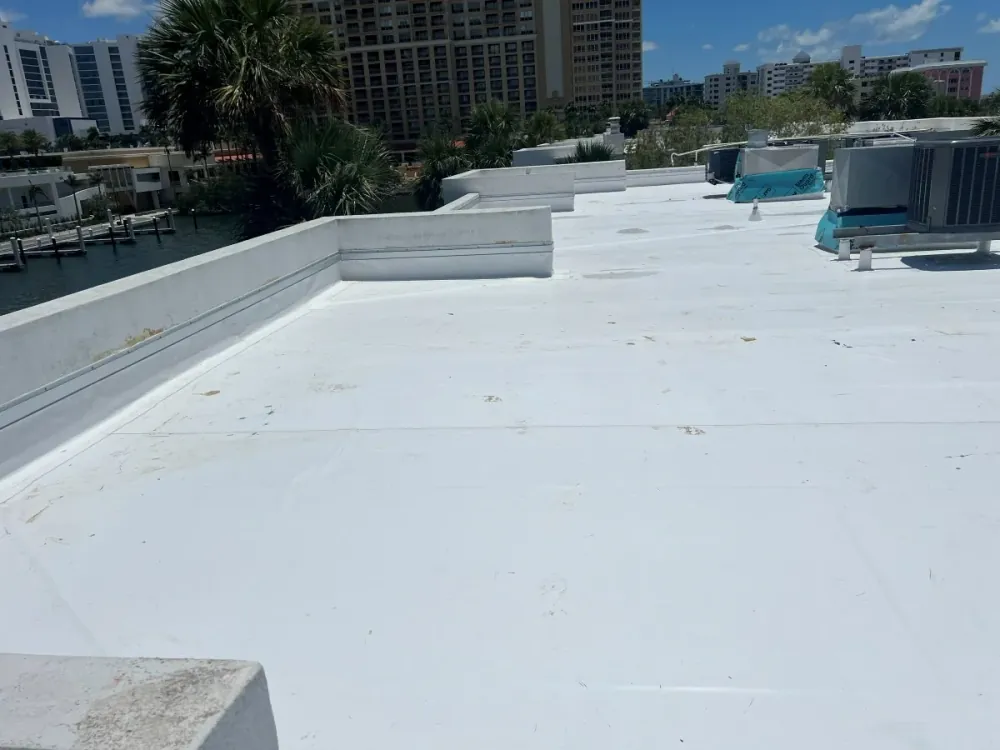
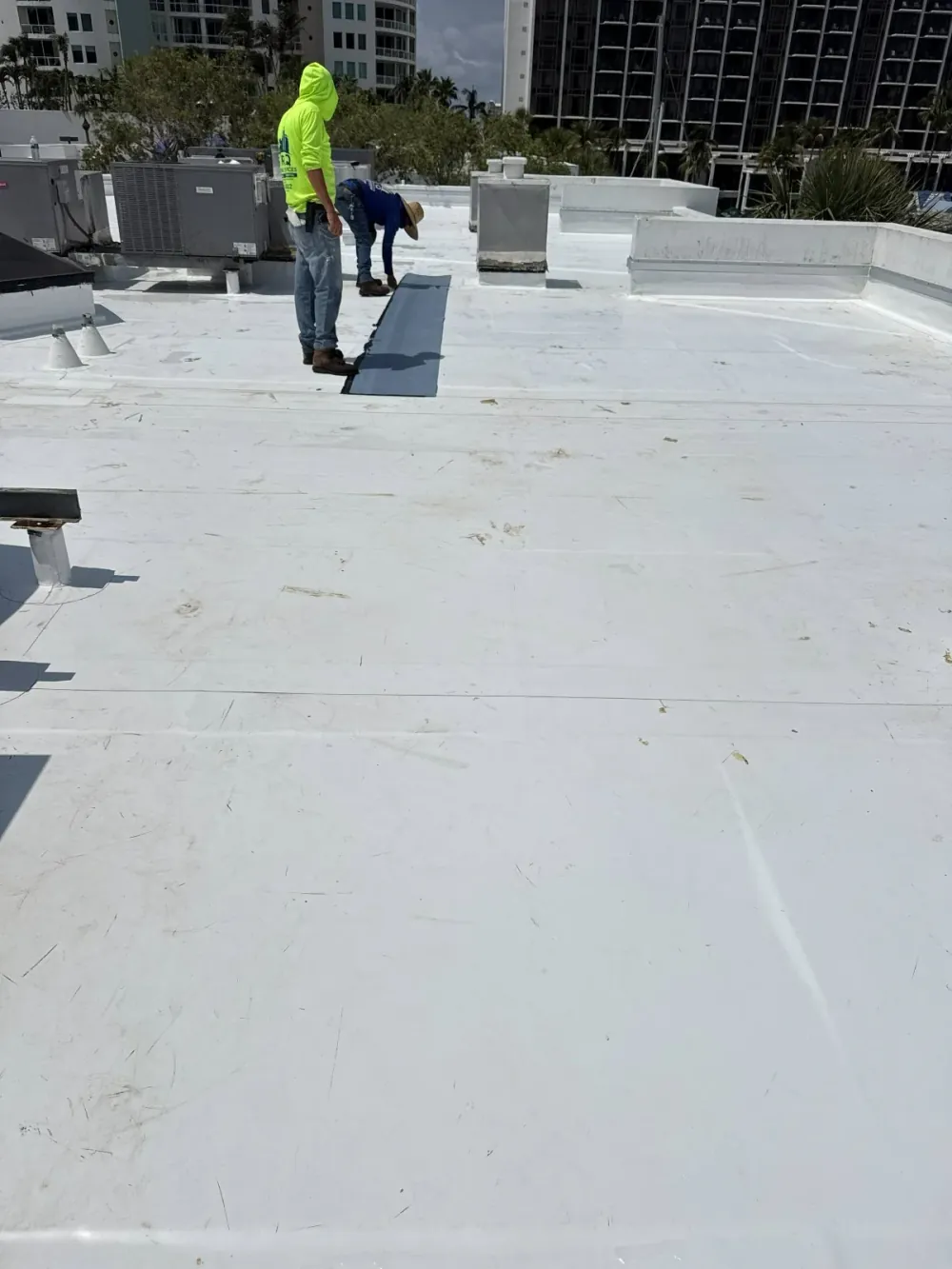
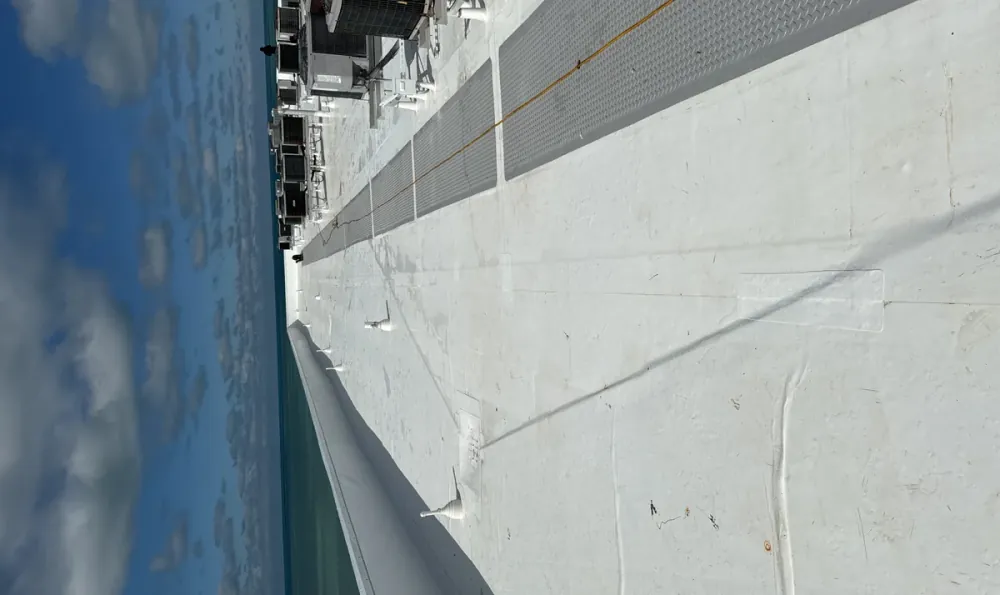
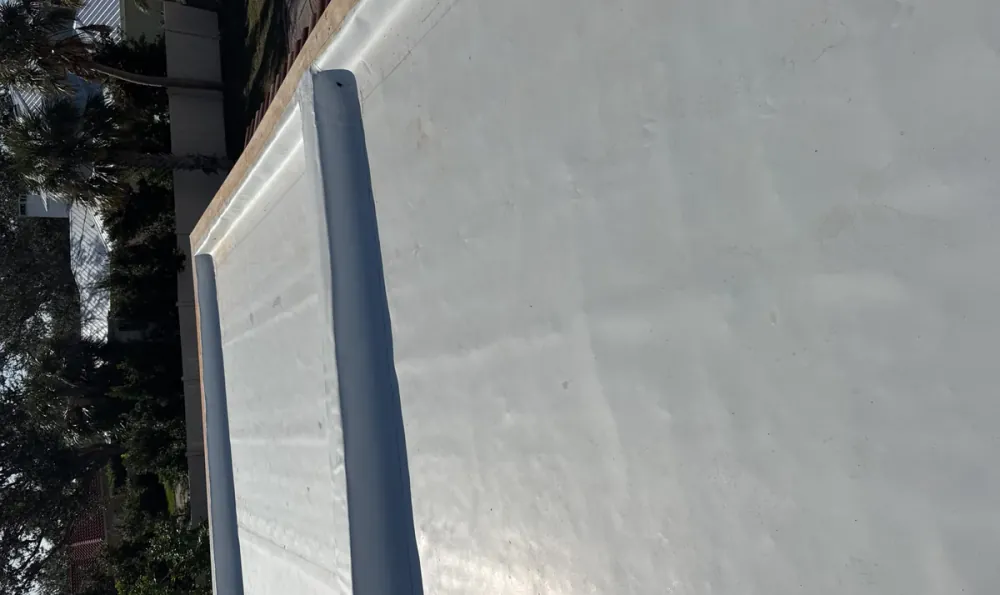
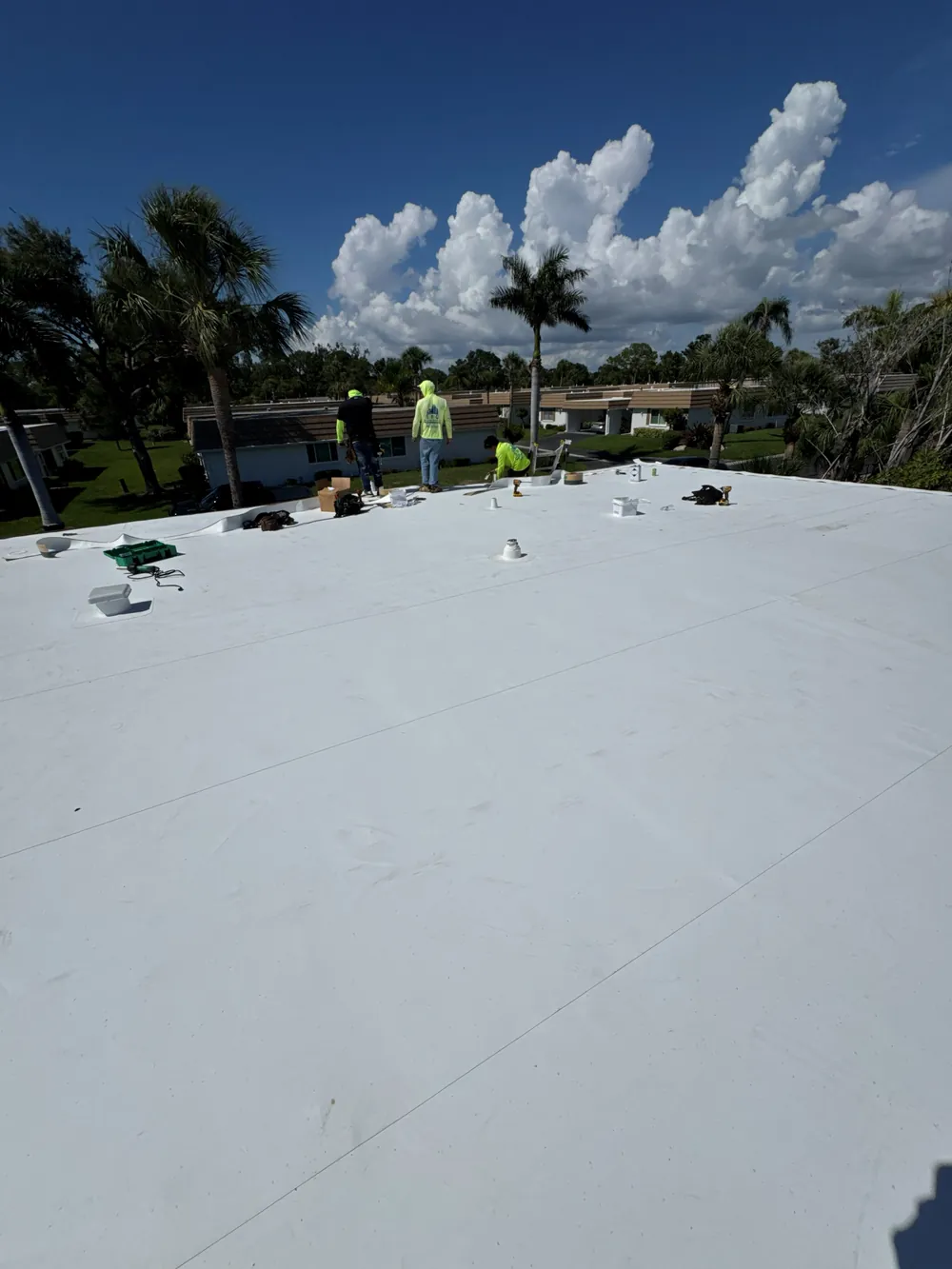
TPO (Thermoplastic Polyolefin) is our most common specification for flat commercial roofs in Southwest Florida. Heat-welded seams, white reflective surface for cooling-cost reduction, 20–25 year manufacturer warranties when properly installed. Best balance of cost, performance, and warranty for most retail and office buildings.
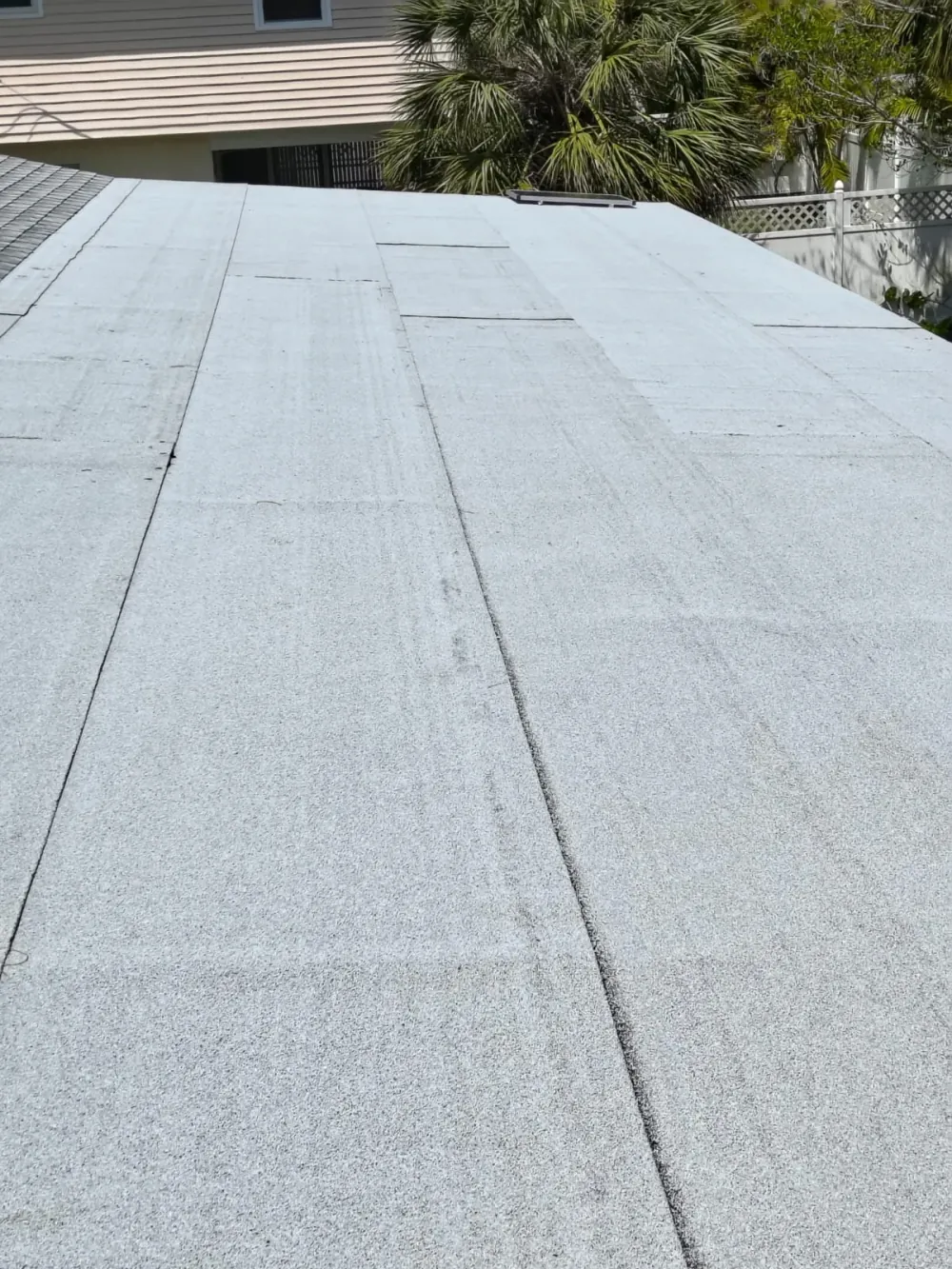
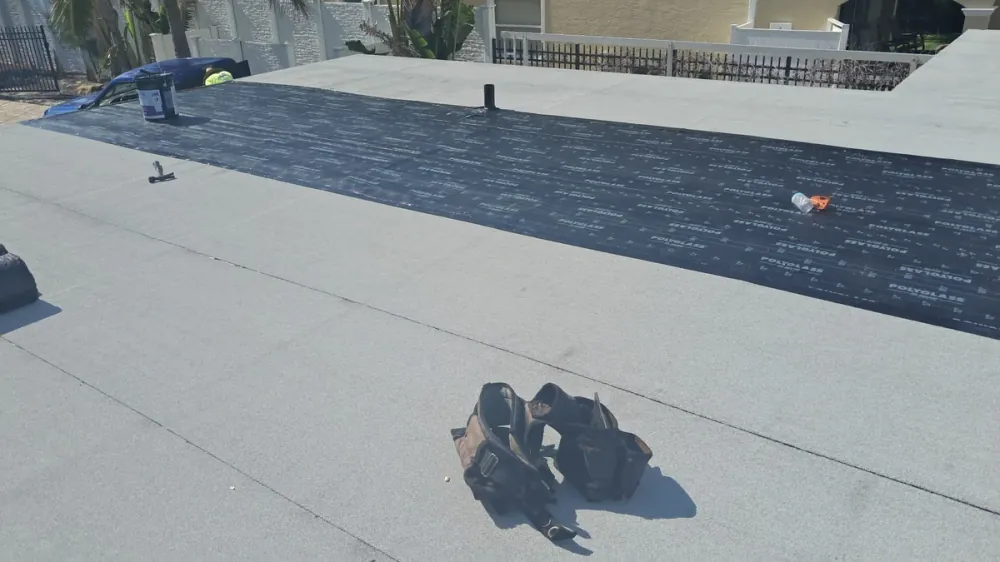
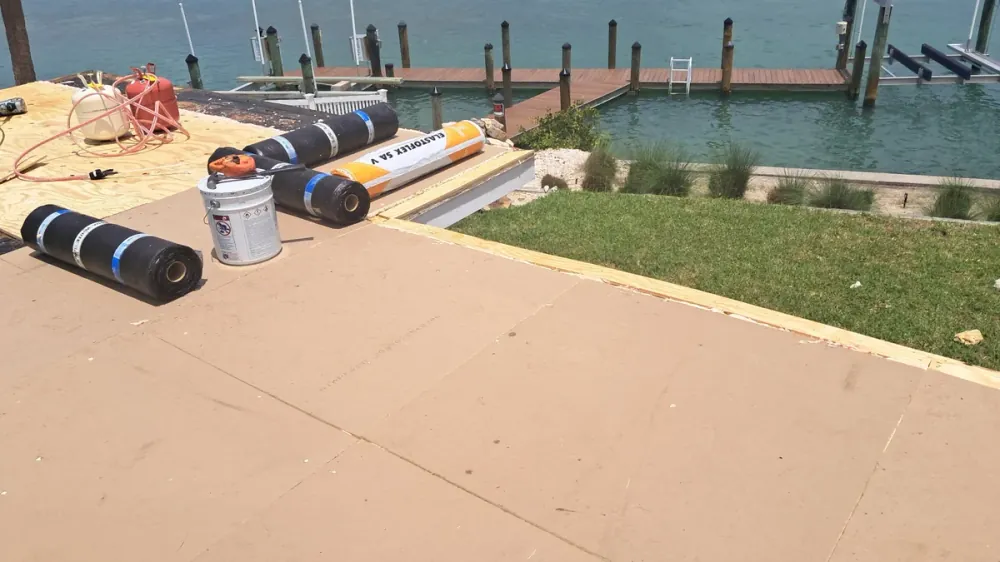
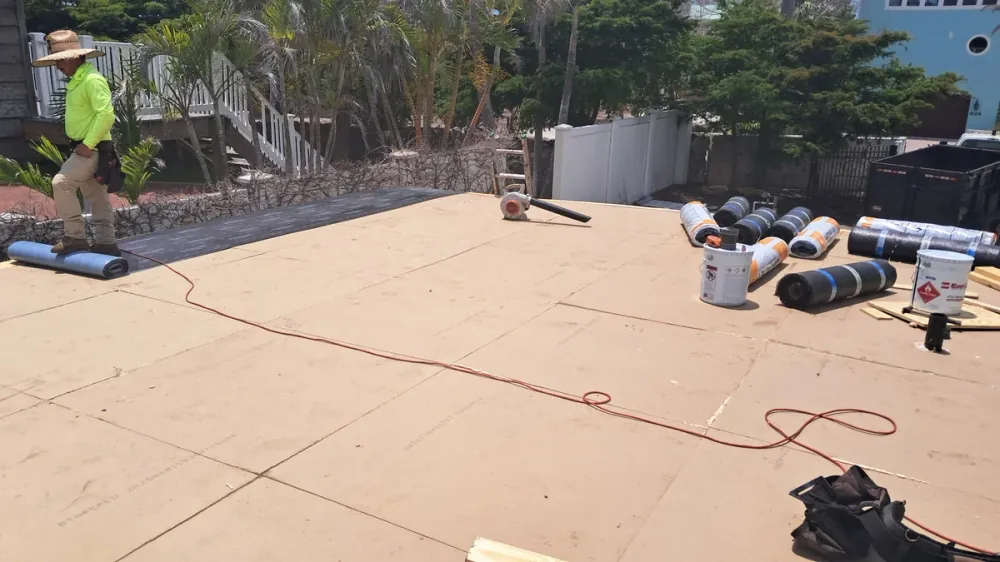
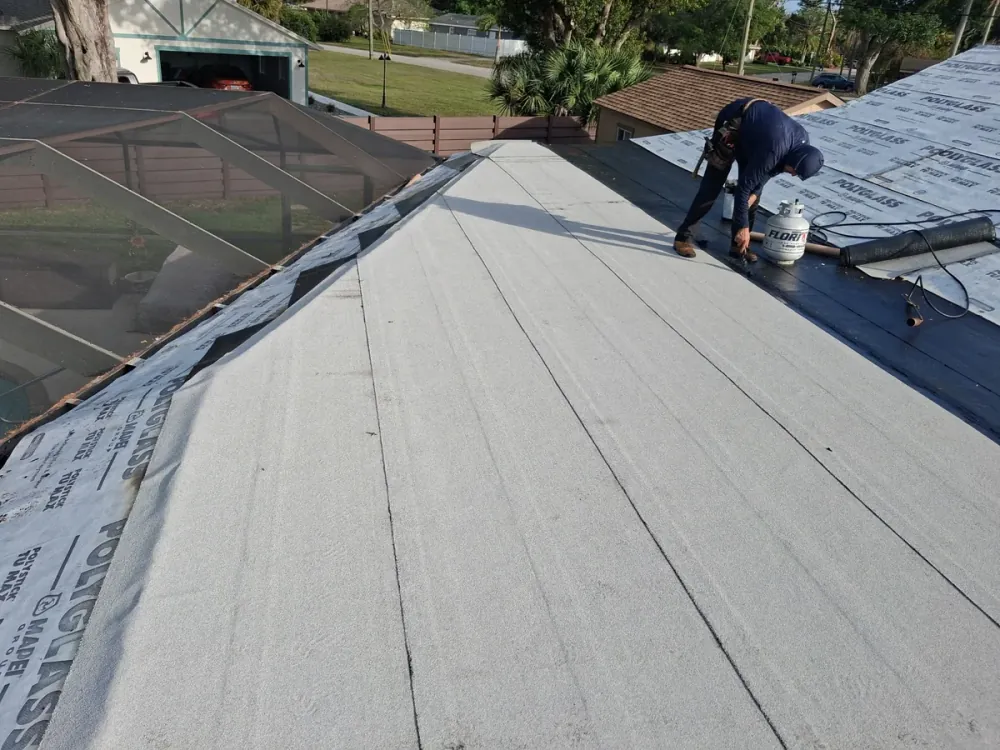
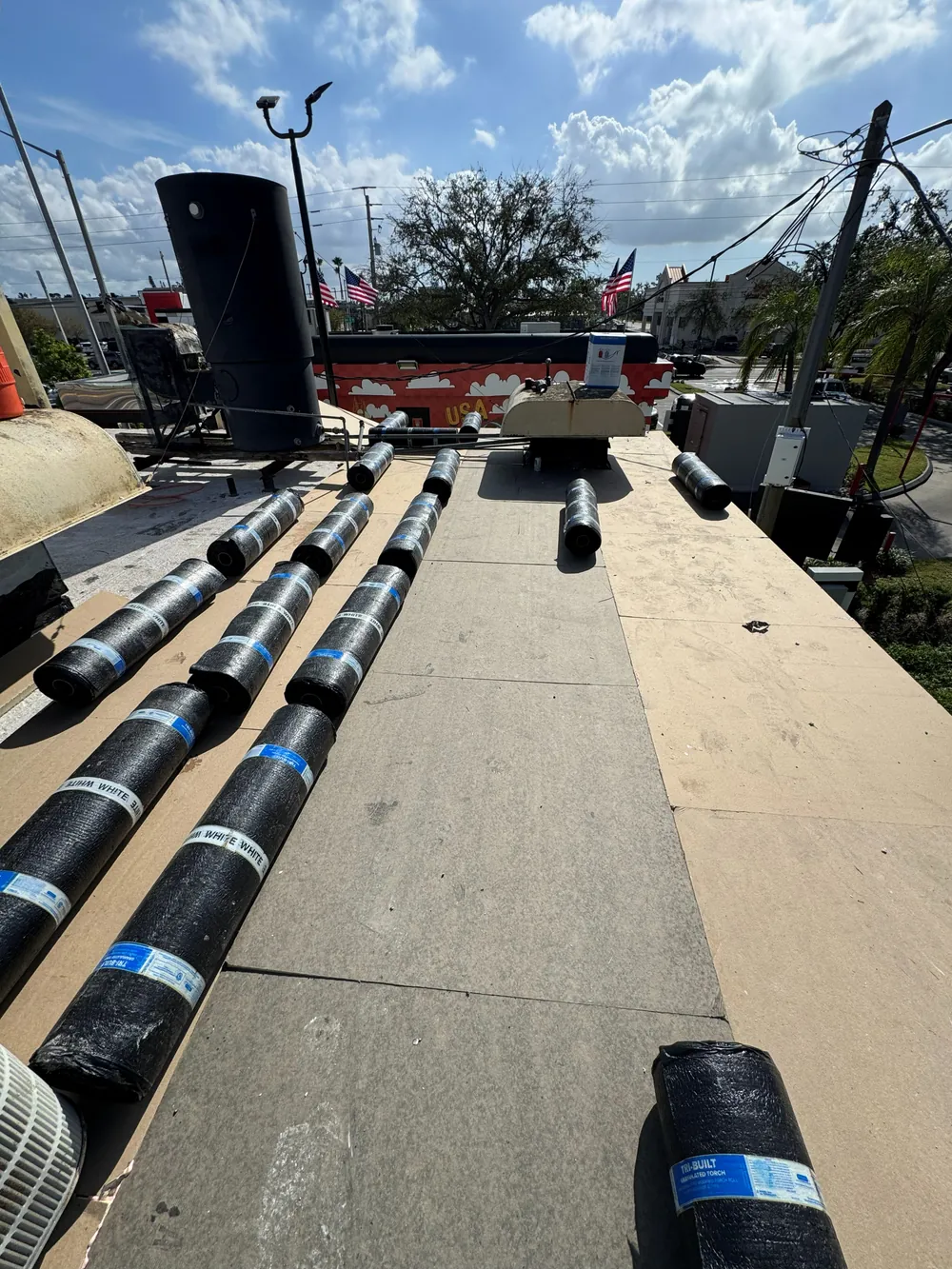
Modified Bitumen suits buildings where torch-down or cold-applied installation makes sense — durable, repairable in the field, proven track record on Florida commercial roofs. Better than TPO in some heavy-traffic applications.
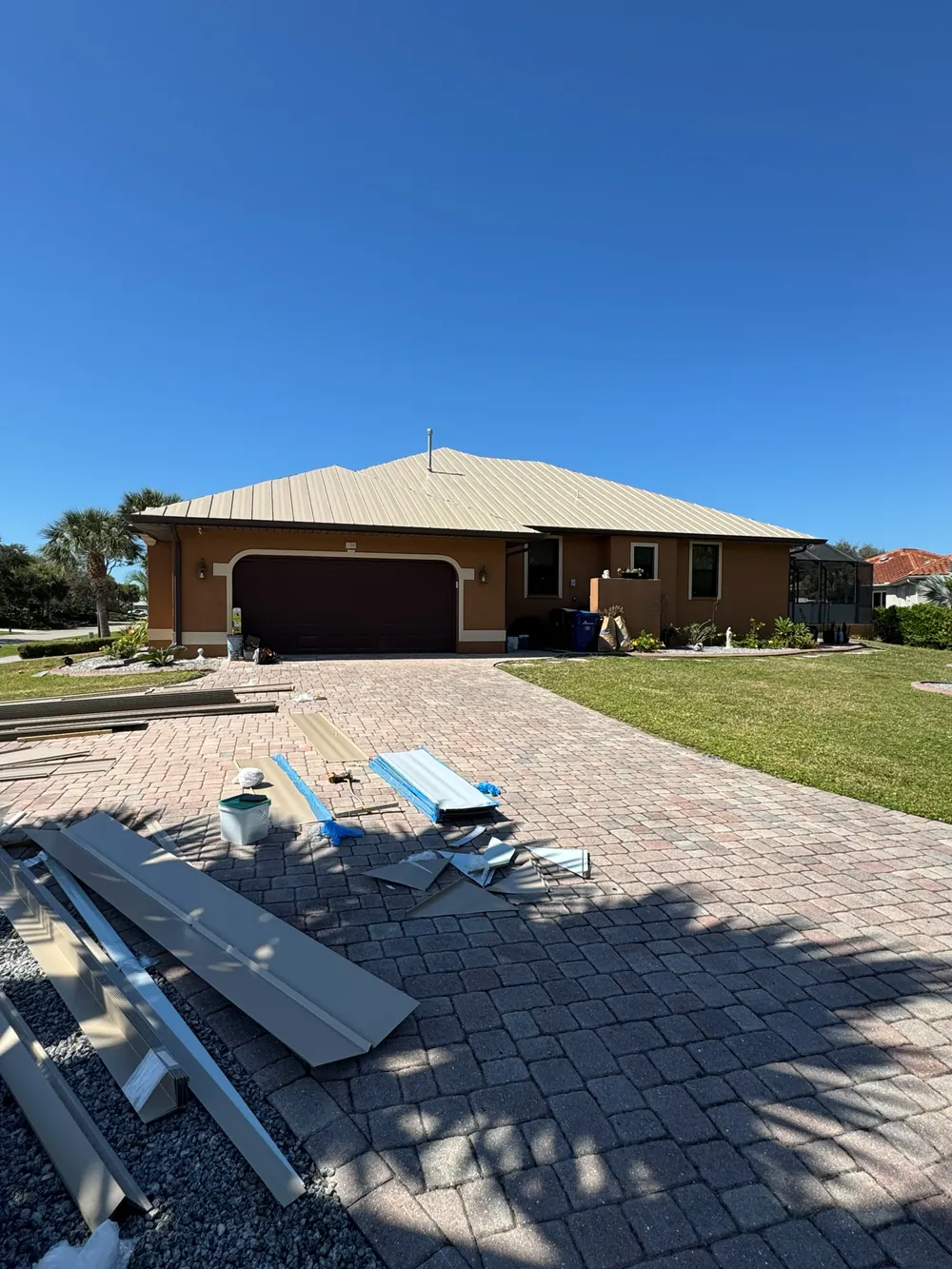
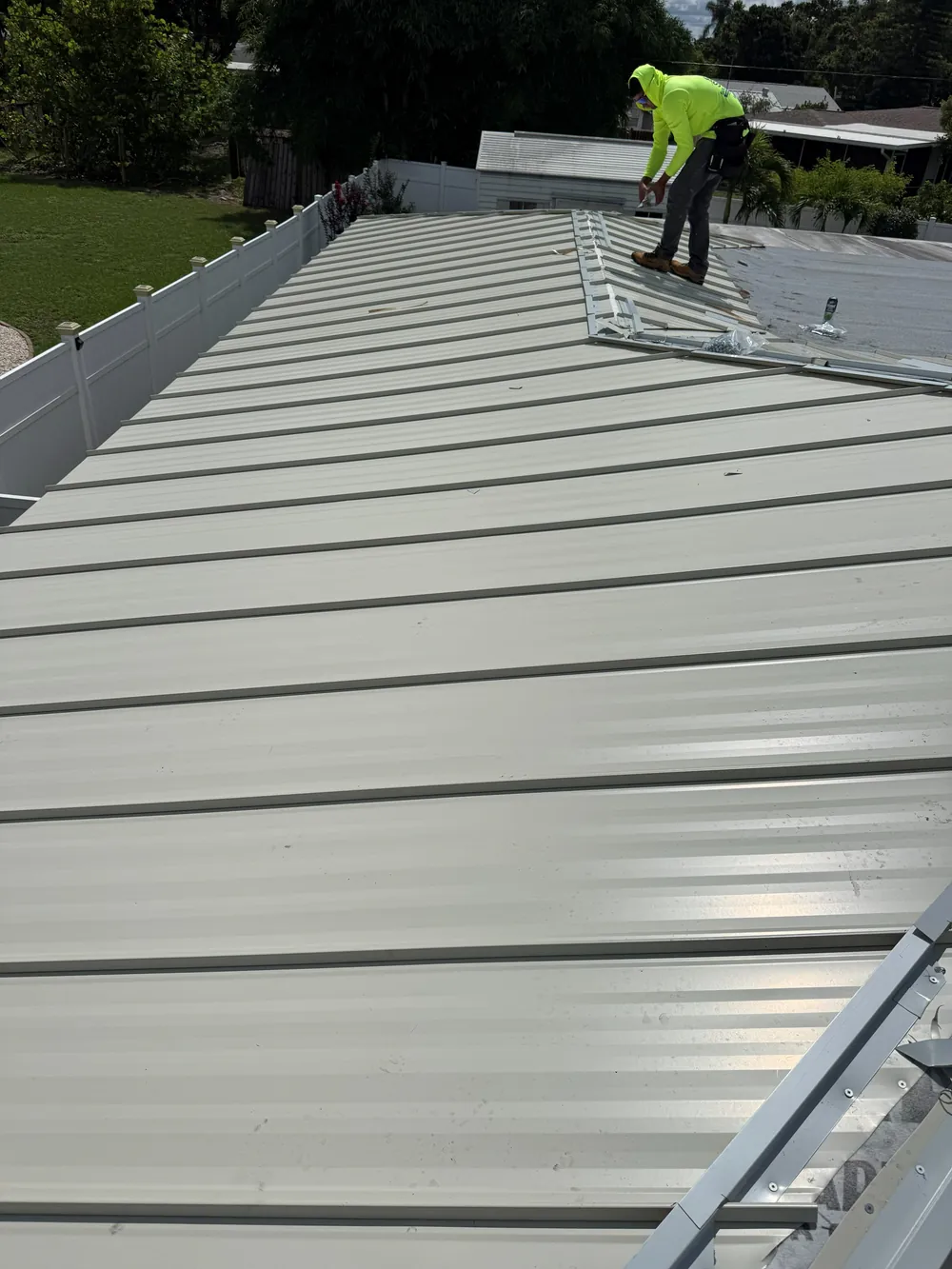
Standing seam metal is the right call for commercial buildings with adequate roof slope (3:12 or steeper). 40–50 year service life, lowest long-term cost when the owner plans to hold the building. Highest upfront cost.
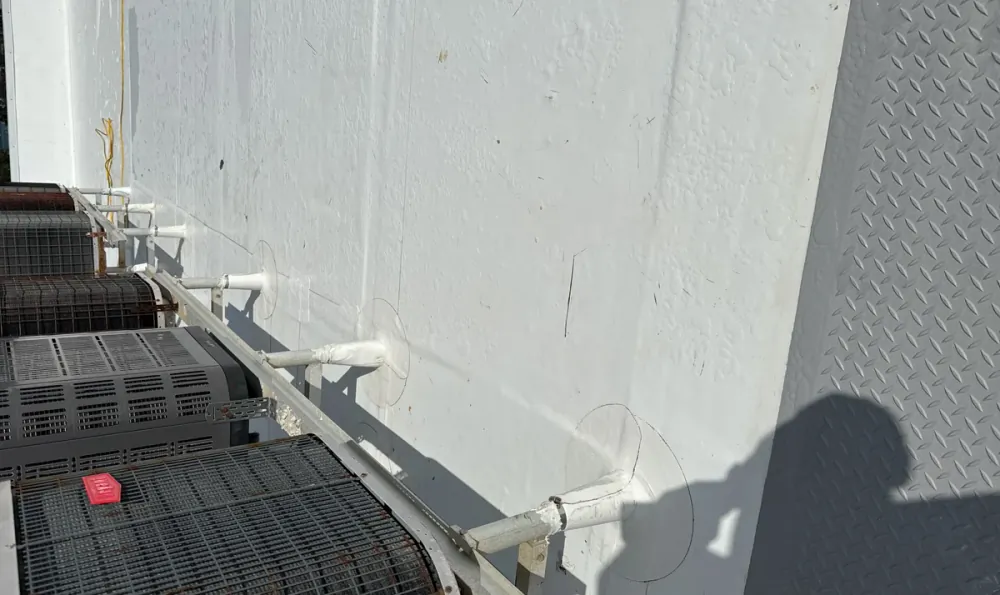
EPDM (Rubber Membrane) still has a place — primarily for buildings with complex penetrations or rooftop equipment that benefit from EPDM's puncture resistance and field-repairability.
Most Common
TPO Membrane
20–25 yr warrantyHeat-welded seams, white reflective surface, best balance for most flat commercial applications. Lower cost than metal, better warranty than EPDM.
Long-Term Hold
Standing Seam Metal
40–50 yr lifespanHighest upfront cost, lowest long-term cost when the owner plans to hold the building. Best for structures with 3:12+ slope.
Heavy Traffic
Modified Bitumen
Field-repairableTorch-down or cold-applied, proven durability on rooftops with HVAC service traffic. Easier to patch and repair than single-ply membranes.
Phased Installation for Occupied Buildings
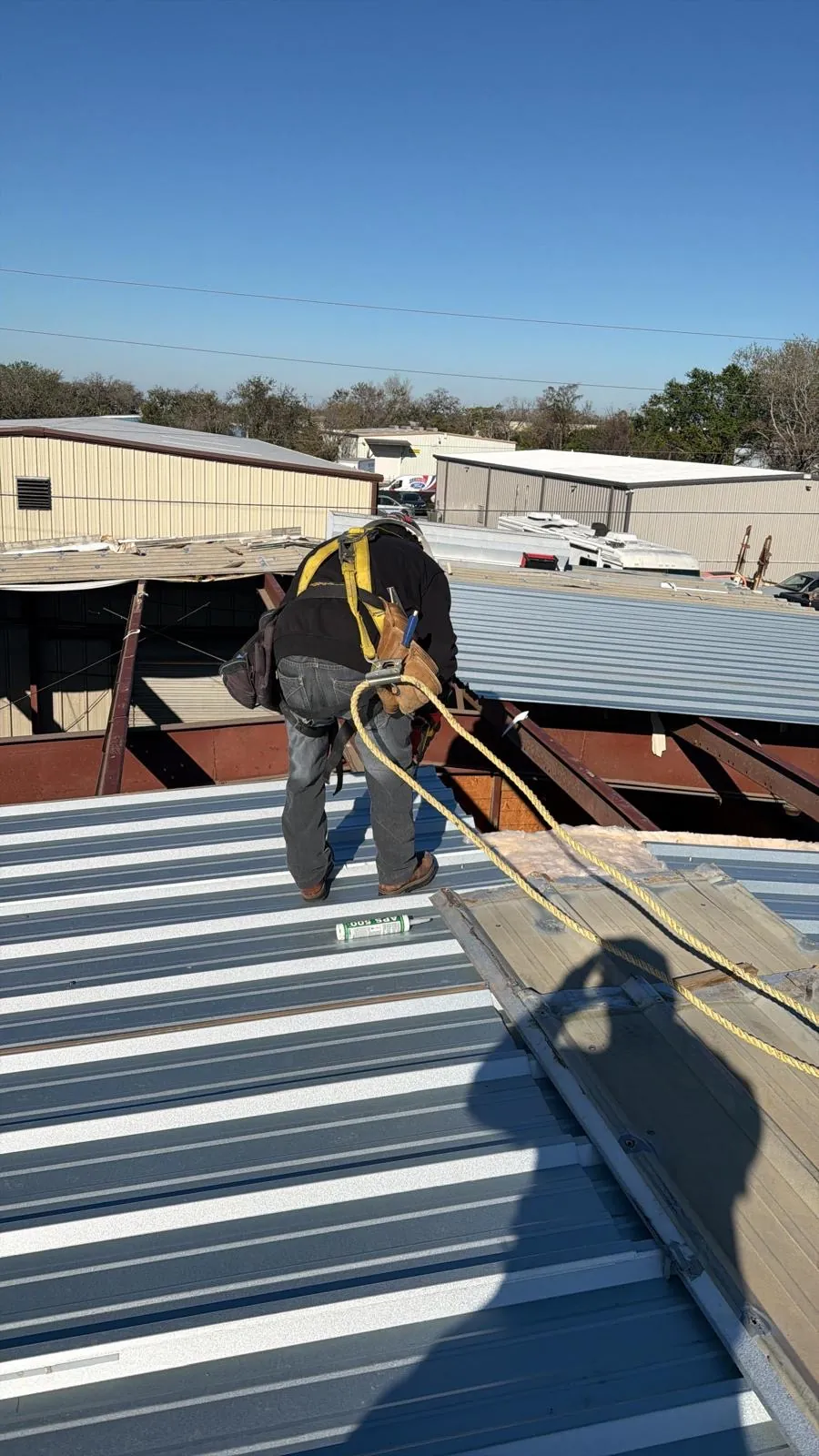
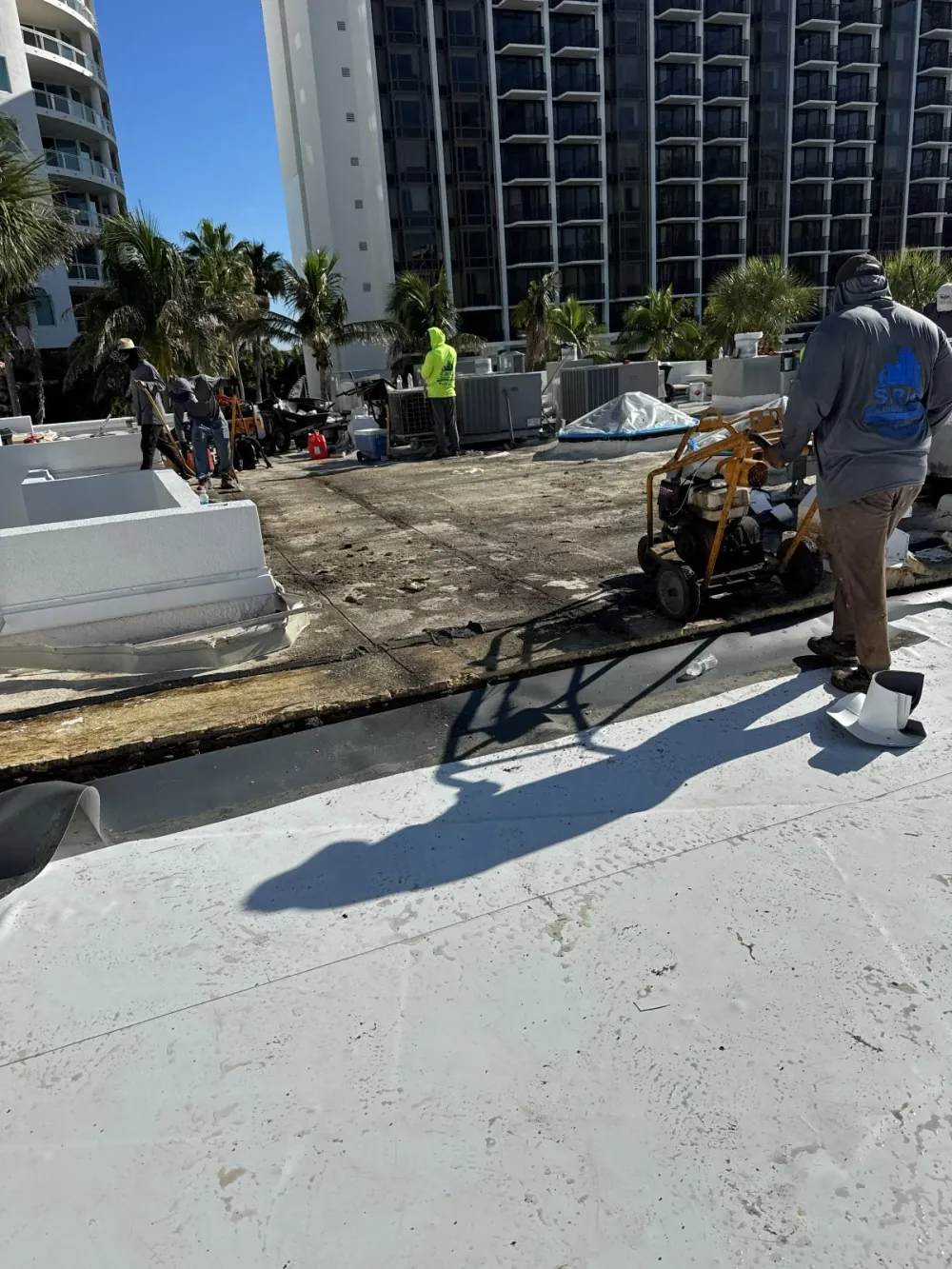
Replacing the roof on an occupied building is a logistics problem as much as a roofing problem. Retail tenants need access for customers. Medical facilities can't risk water damage to equipment. Office buildings need continuous operations. Phased installation is how we handle replacement on buildings that can't shut down for the project.
The approach: tear off and replace one section at a time, keeping the rest of the building under the existing membrane until that section is ready. Each section gets new insulation, new membrane, and full waterproofing before we move to the next. The building stays watertight throughout — no temporary tarps holding back rain, no leaks during transitions.
For multi-tenant retail or office work, we coordinate with property management for tenant notifications, access logistics, and HVAC shutdown coordination. Night and weekend work is available for buildings where daytime crew presence isn't viable. Critical work — over server rooms, medical imaging suites, retail inventory — gets prioritized timing to minimize tenant exposure.
Multi-building portfolio? We offer property management service agreements with phased reroof schedules, predictable annual capital planning, and consolidated billing across all your properties.
Key Benefits
Why It Matters
Full System Replacement
Complete removal of failed membrane, insulation assessment, deck repair, and new system installation. We don't overlay failing systems when replacement is the right answer.
Florida Energy Code Compliance
New commercial roof replacements in Florida must meet current energy code insulation R-values. We design systems that comply and document compliance for your building records.
Phased Installation Available
For occupied buildings, we can phase the replacement in sections to keep the building continuously watertight throughout the project. Critical for retail, medical, and multi-tenant work.
Manufacturer NDL Warranties
We provide manufacturer-backed NDL (No Dollar Limit) warranties on qualifying TPO and metal commercial roofing systems — full coverage of materials and labor for the warranty period.
How It Works
Our Installation Process
Full Assessment
Infrared or core testing to assess insulation condition, drainage analysis, and structural review if needed. We map out wet insulation before quoting scope.
System Specification
We specify the appropriate system (TPO, metal, EPDM) and insulation package for your building type, budget, and warranty requirements.
Permits
All commercial roofing permits require engineering documentation in Florida. We handle all applications and engineer coordination.
Installation
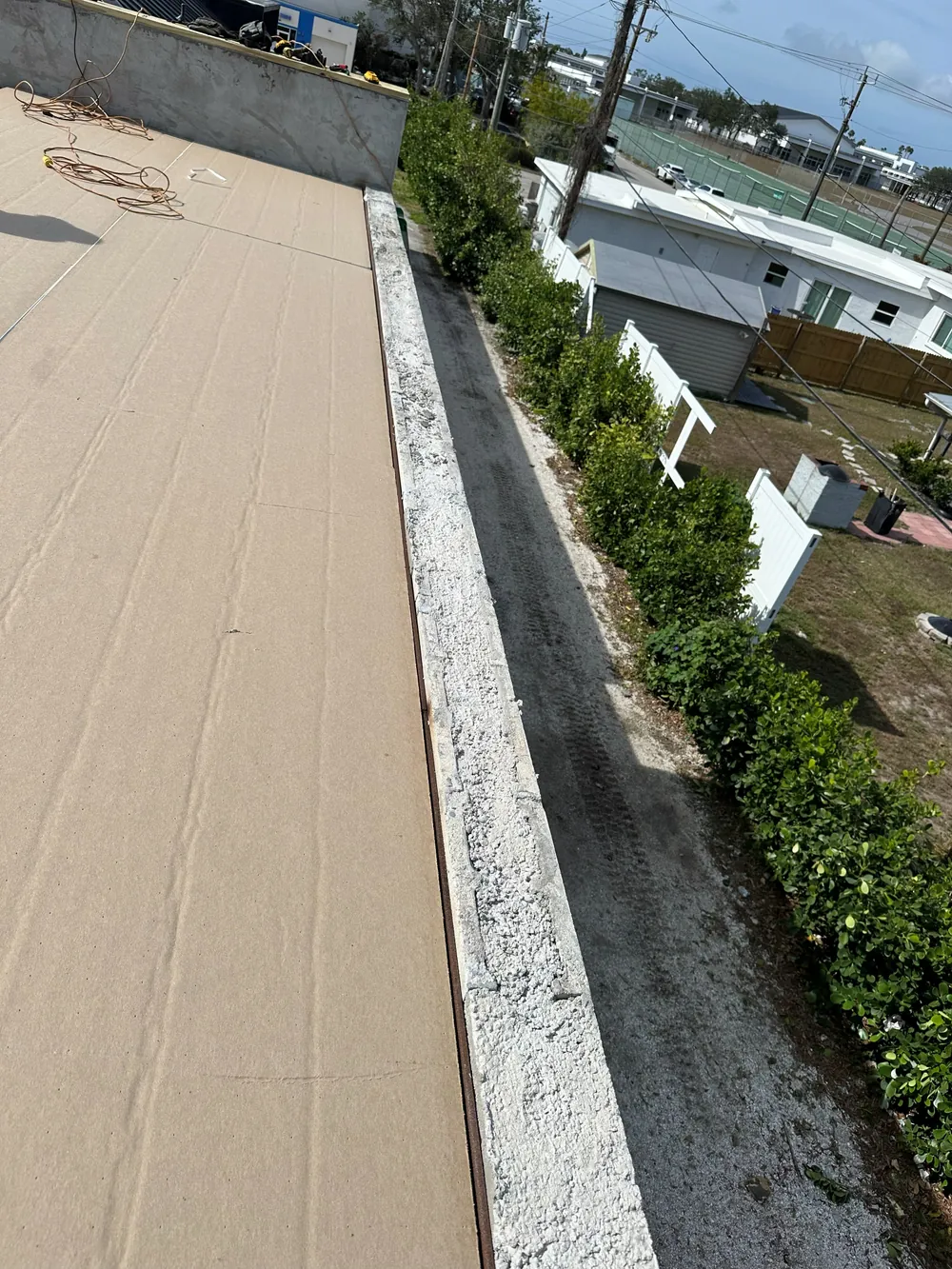
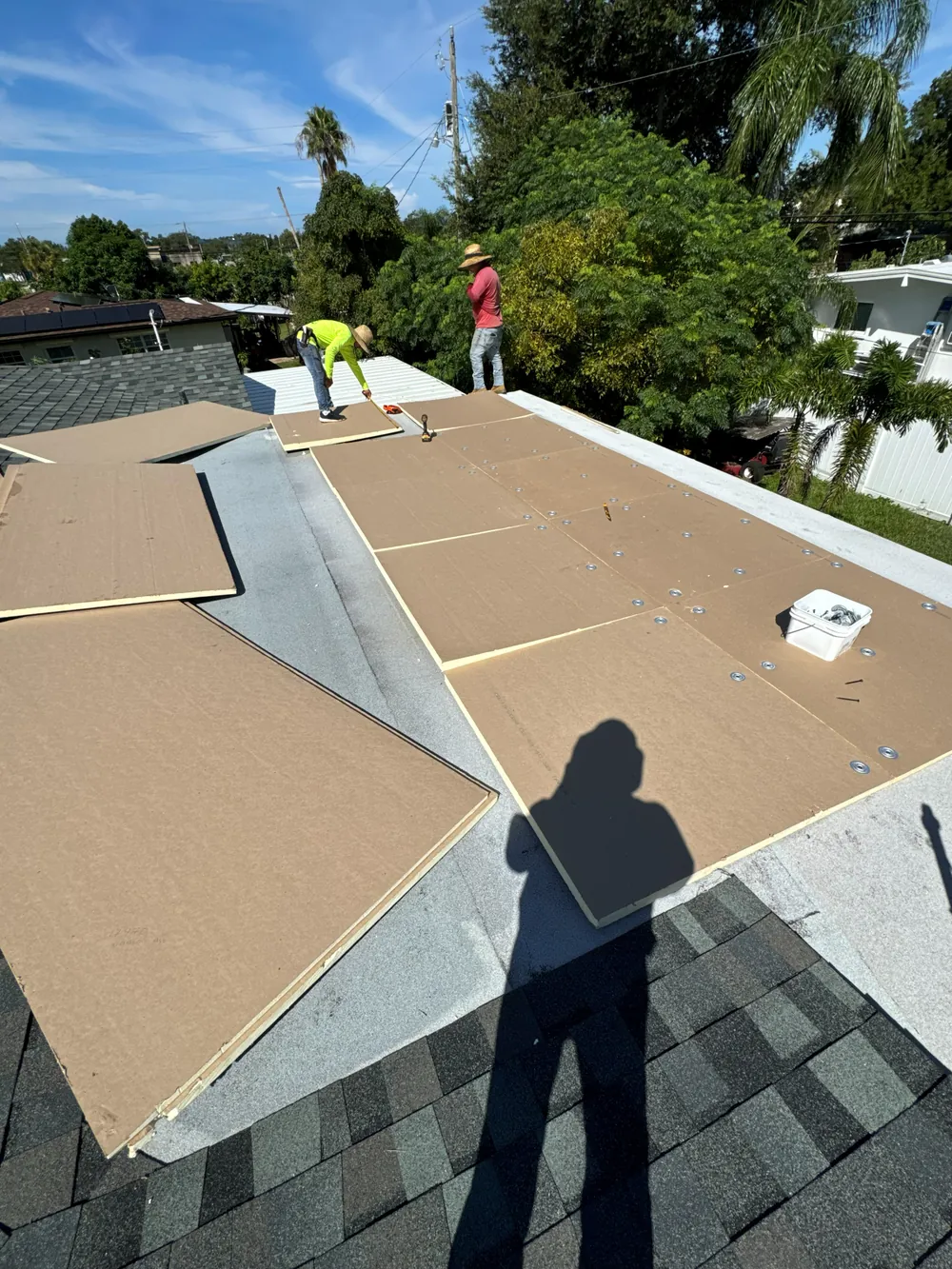
Removal, deck repair, insulation install, and new membrane system. All work inspected by county at required milestones. Phased on occupied buildings.
Warranty Documentation
Manufacturer warranty registration, completion photos, material cut sheets, and code compliance documentation for your building file.
Project Gallery
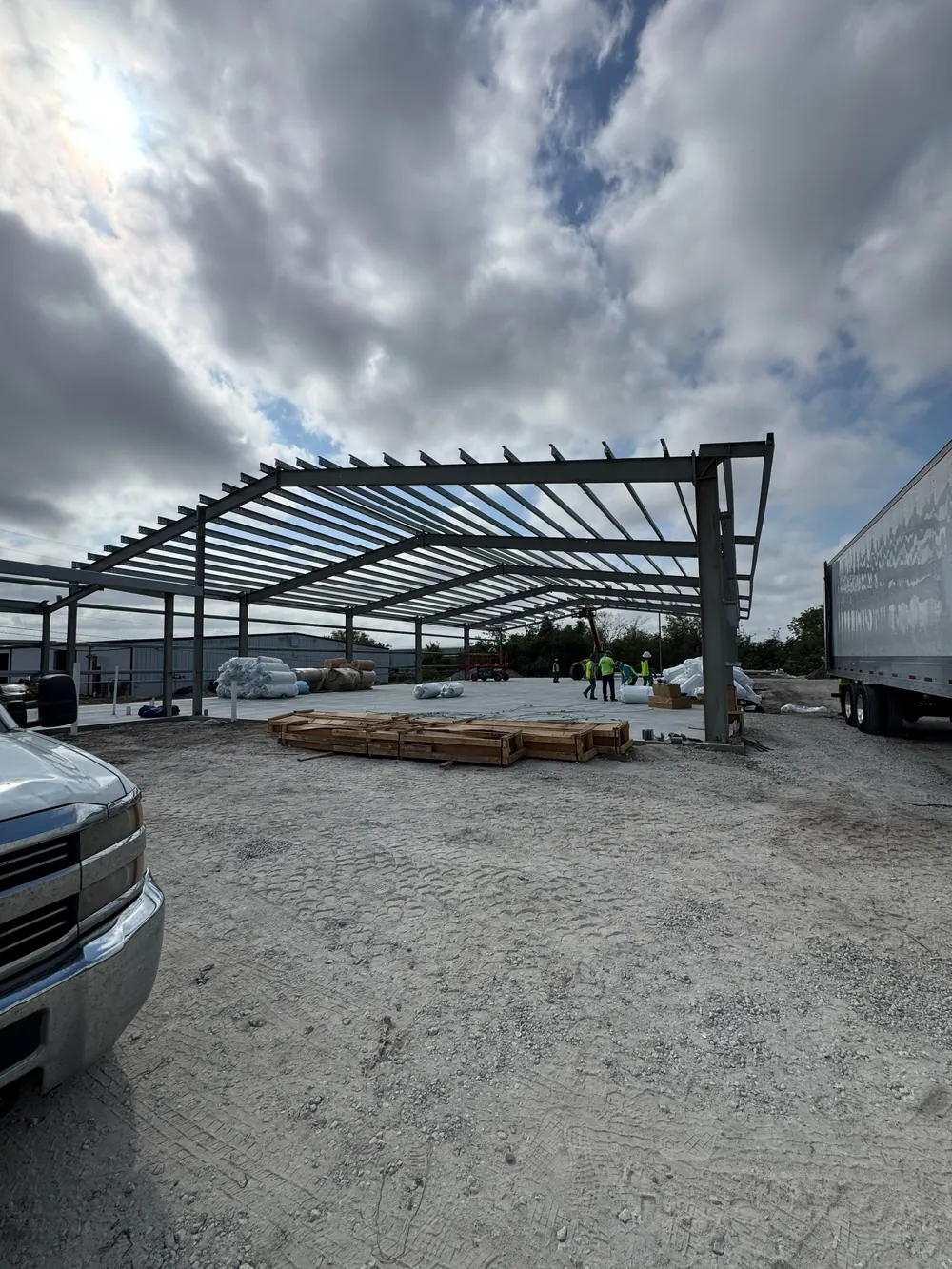
Commercial Replacement Projects in Southwest Florida
Completed roofing projects across Sarasota, Bradenton, Venice, Lakewood Ranch, and Southwest Florida.
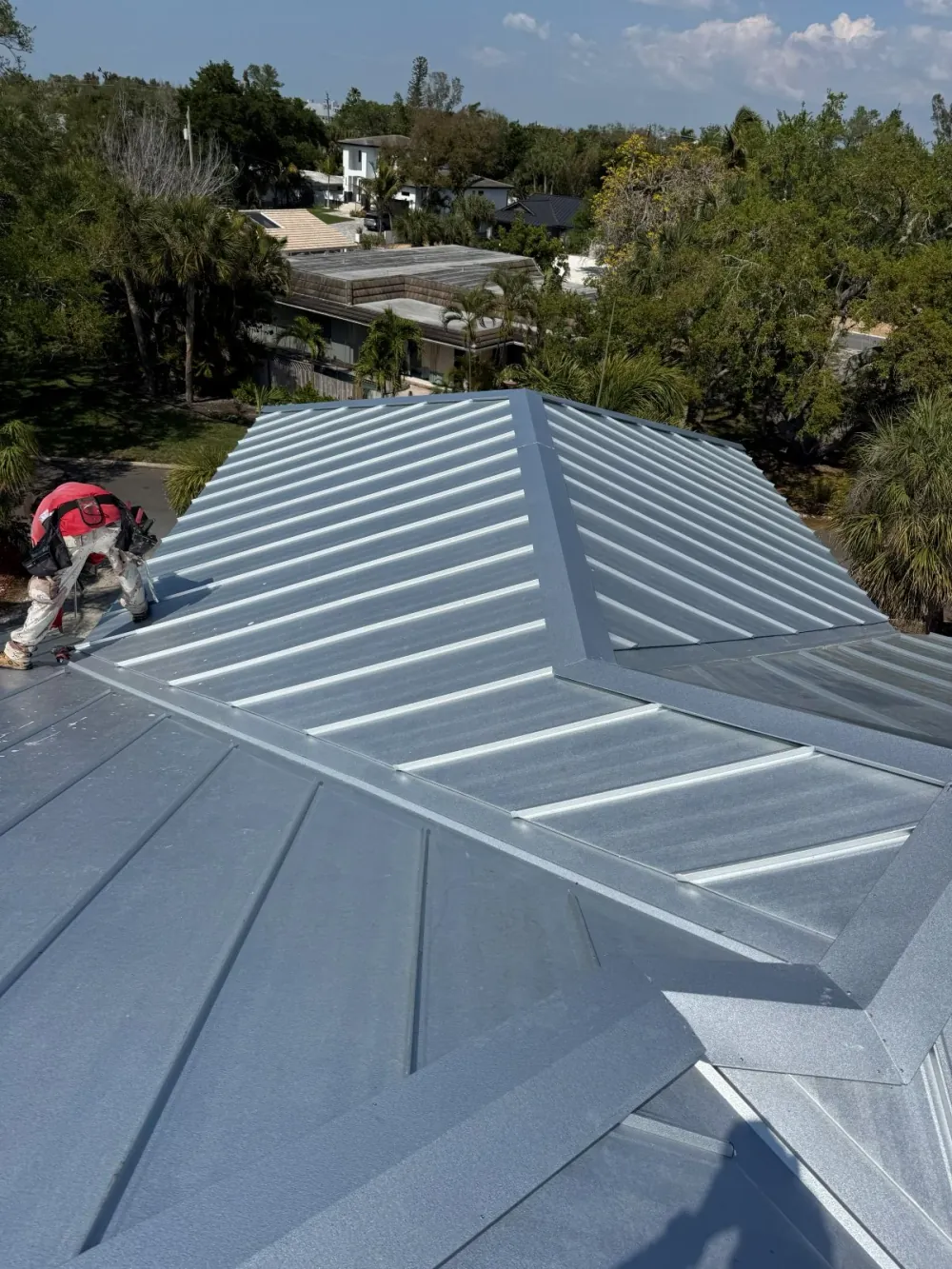
Standing Seam Metal Roof
Sarasota, FL
Metal Roofing Click to expand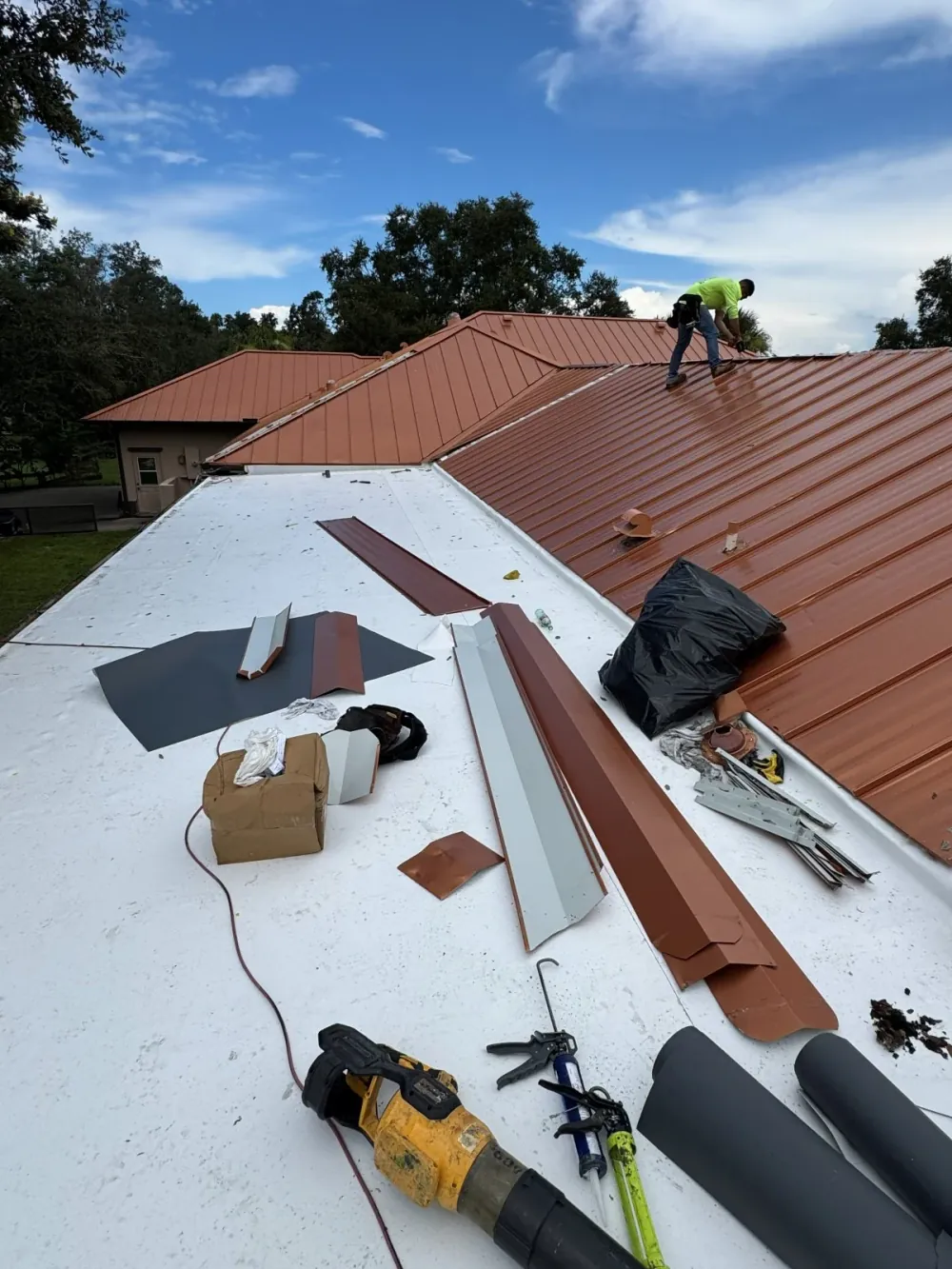
Metal Roof Installation
Sarasota, FL
Metal Roofing Click to expand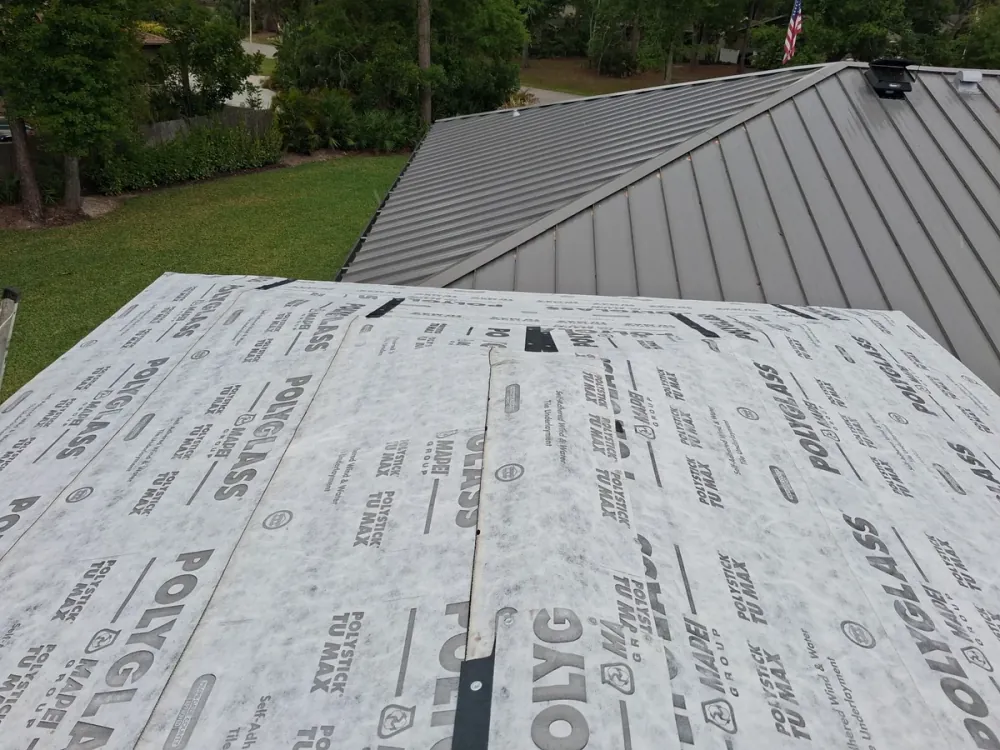
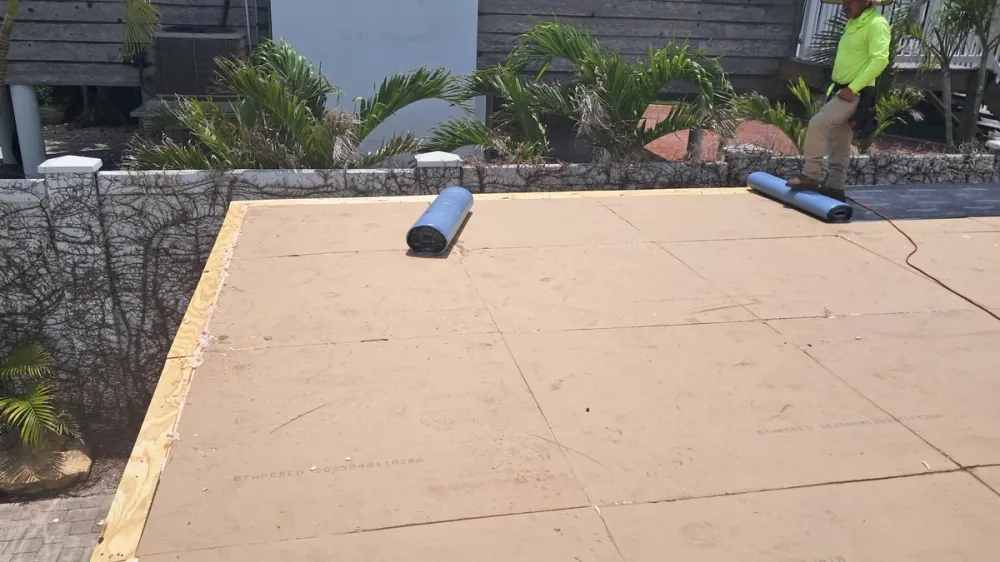
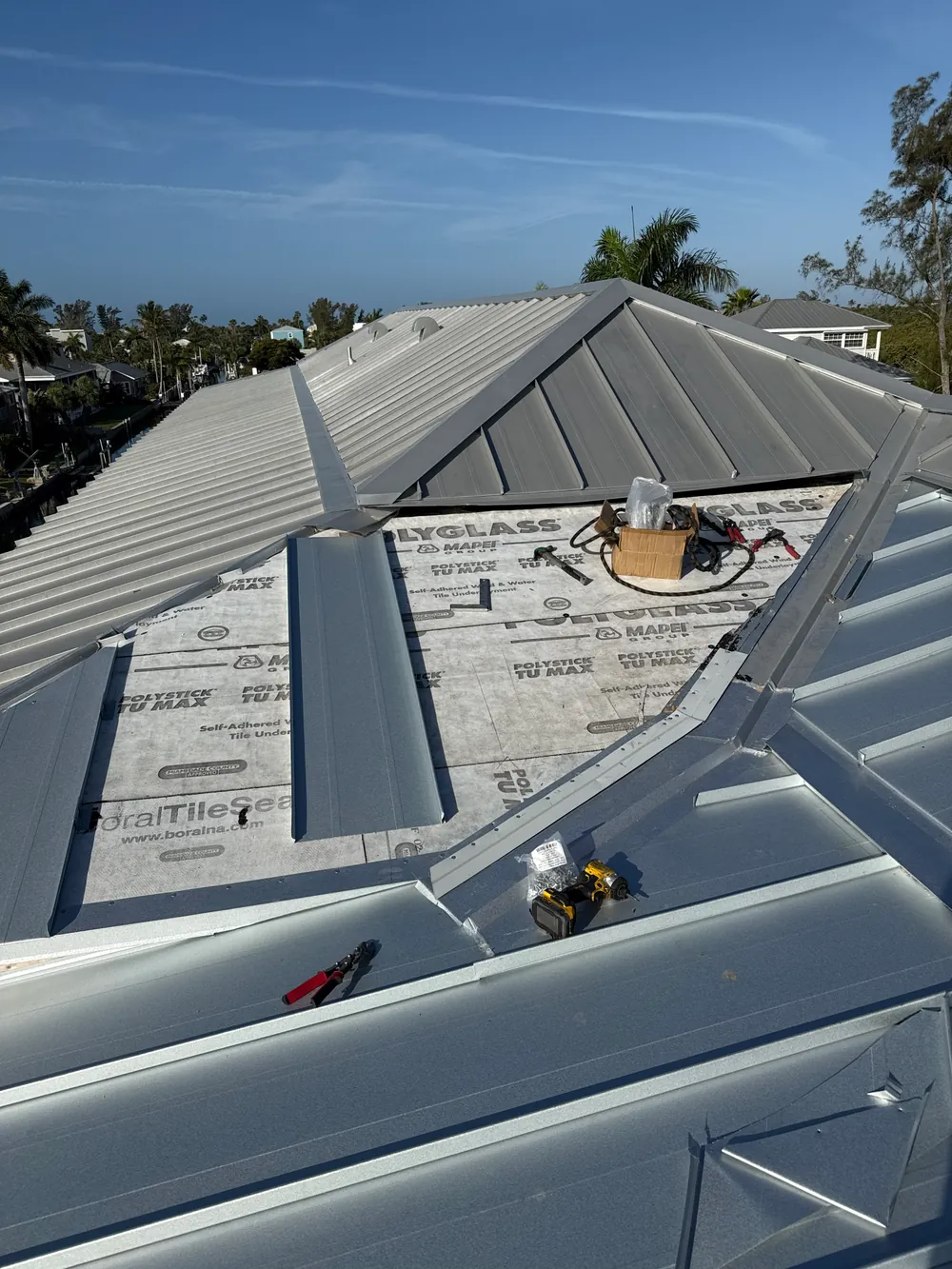
Metal Roofing & Underlayment
Sarasota, FL
Metal Roofing Click to expand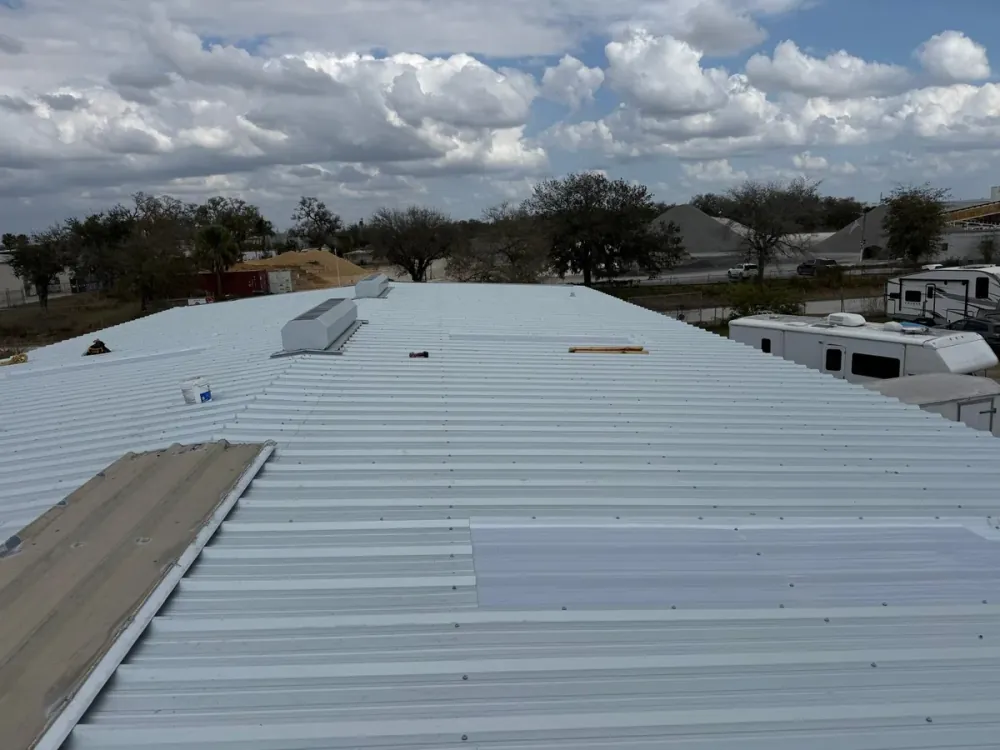
Metal Roofing Project
Sarasota, FL
Metal Roofing Click to expand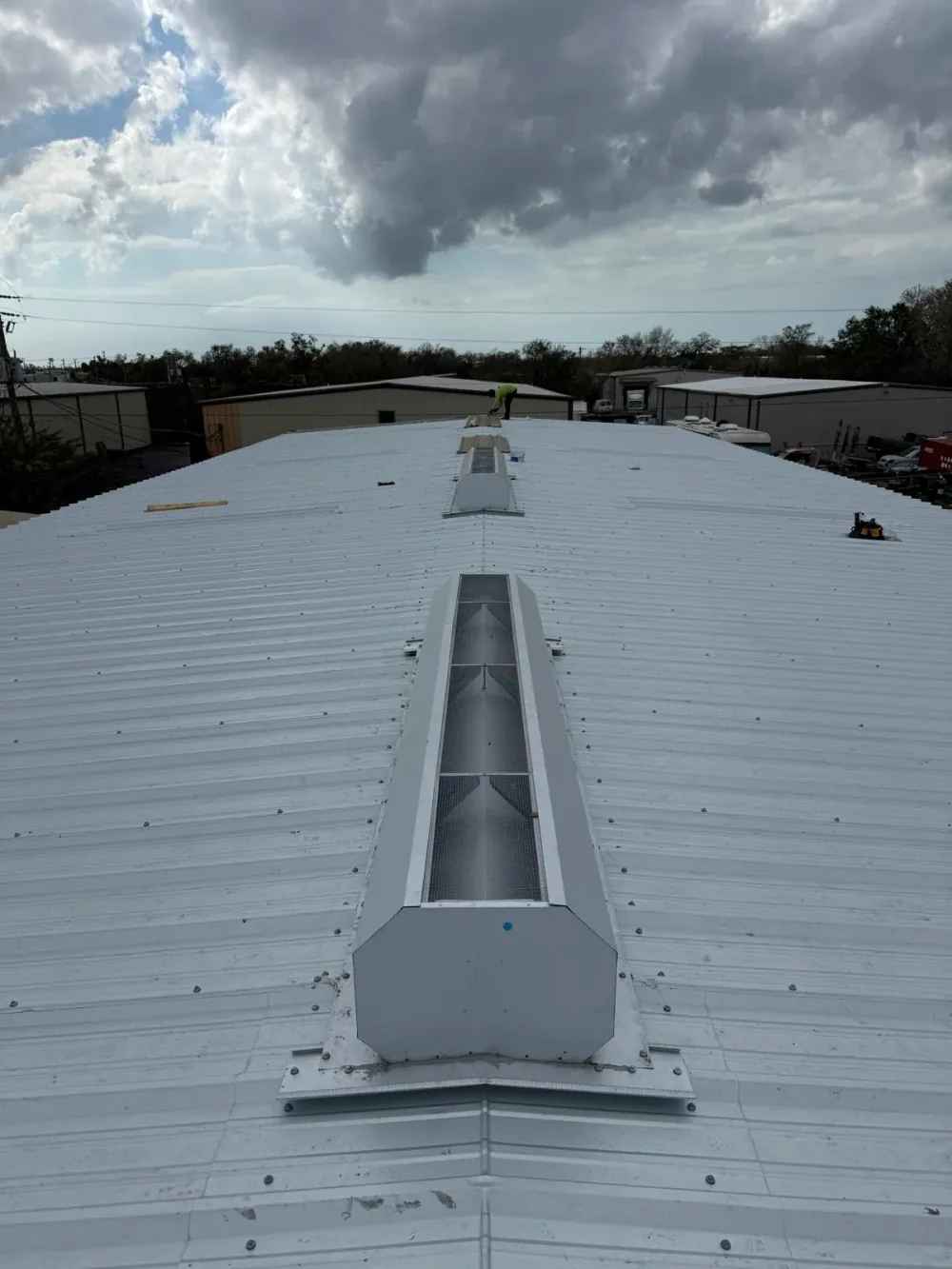
Metal Roof Installation
Sarasota, FL
Metal Roofing Click to expand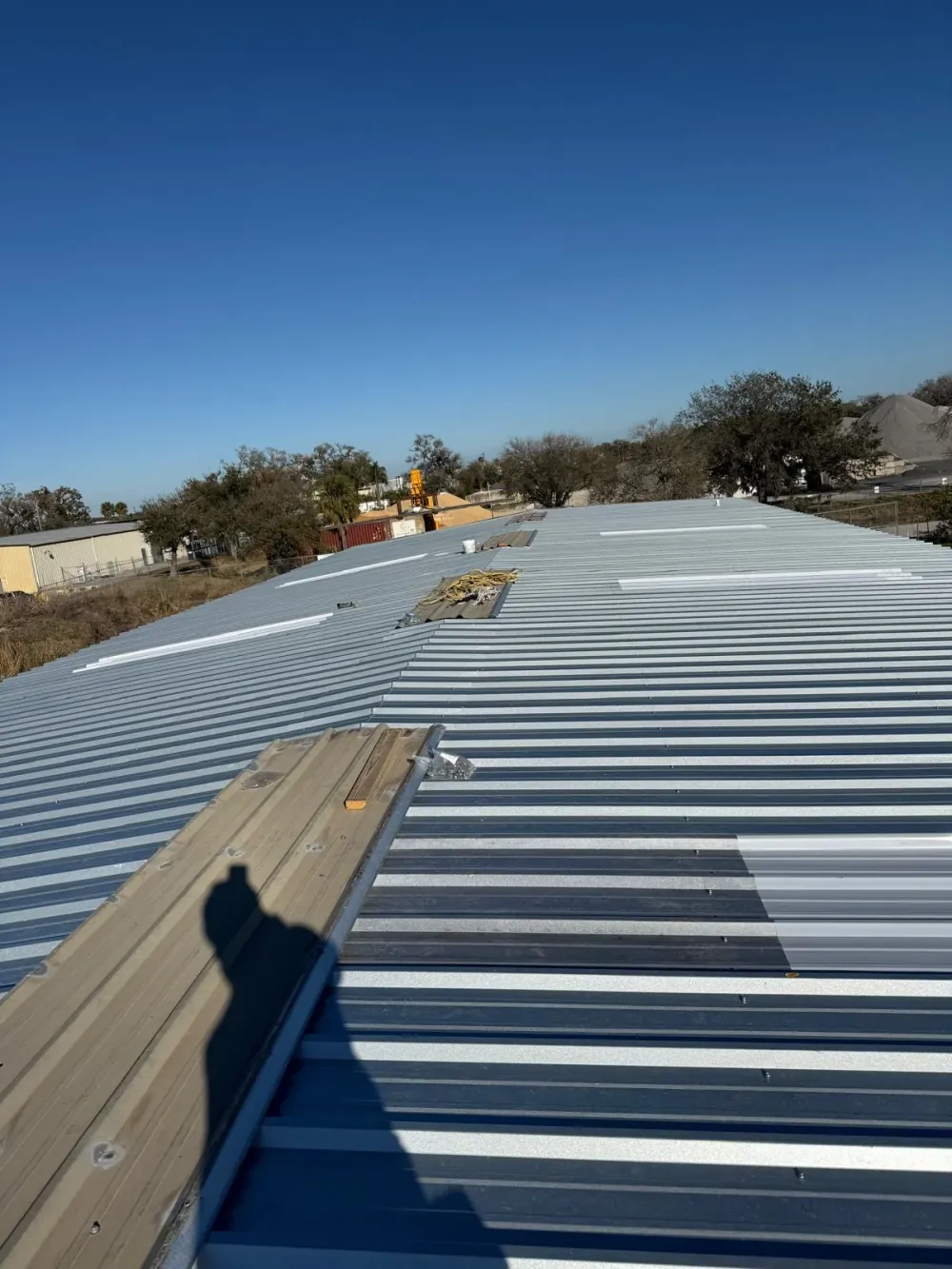
Metal Roof Installation
Sarasota, FL
Metal Roofing Click to expand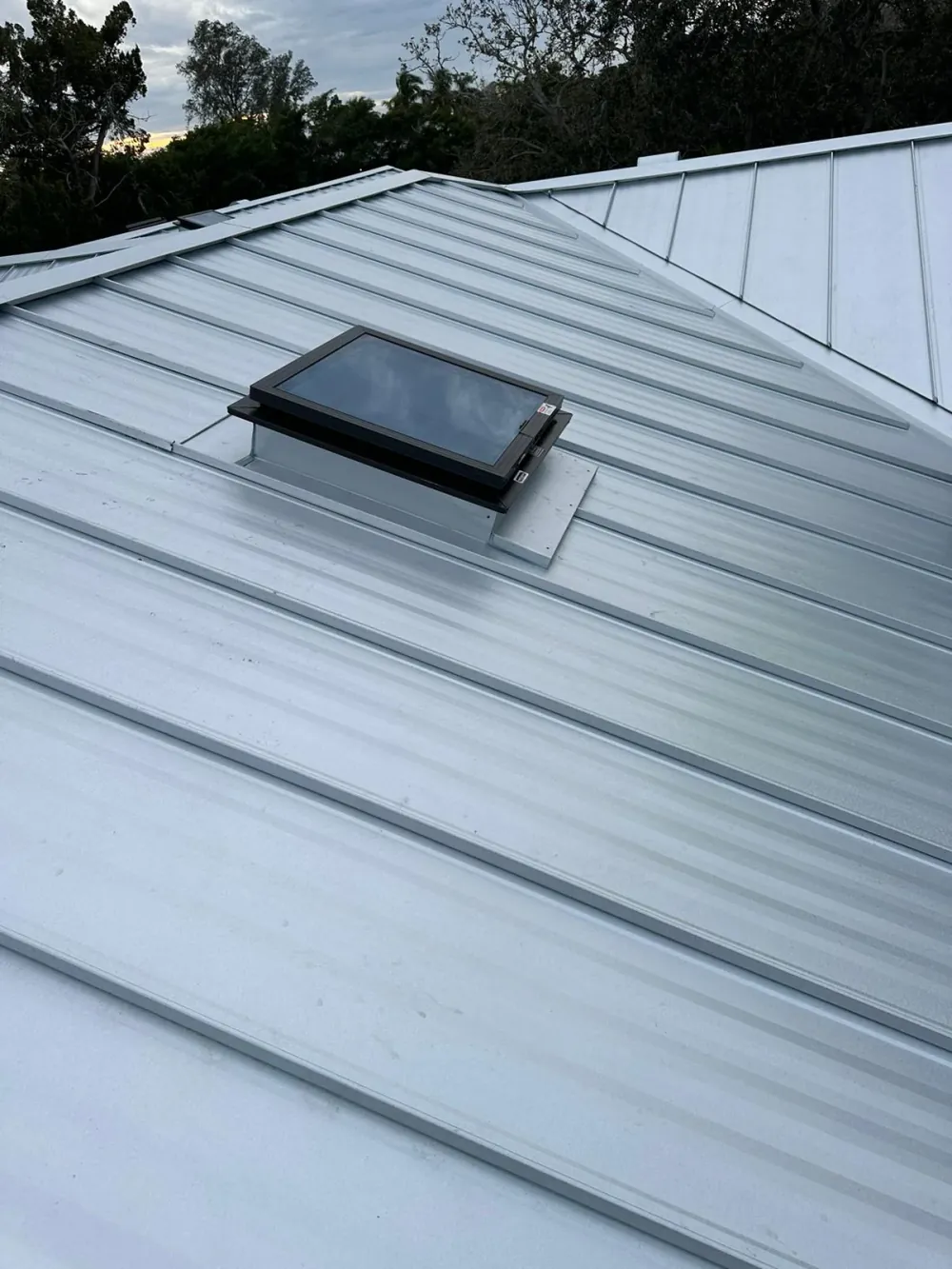
Metal Roof Installation
Sarasota, FL
Metal Roofing Click to expand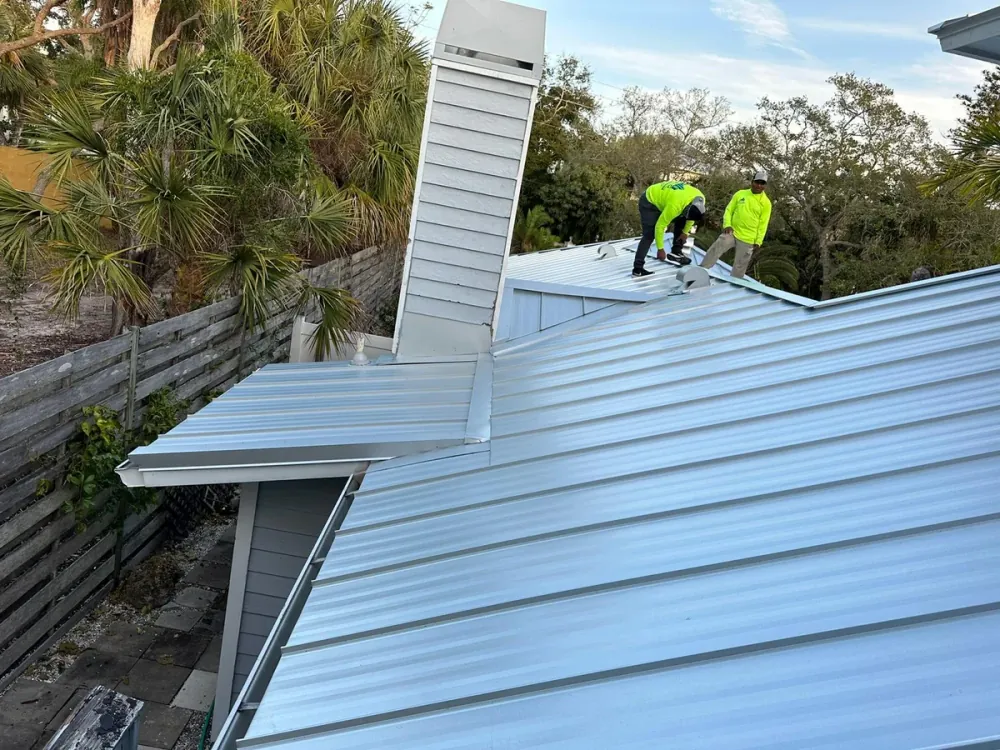
Metal Roof Installation
Sarasota, FL
Metal Roofing Click to expand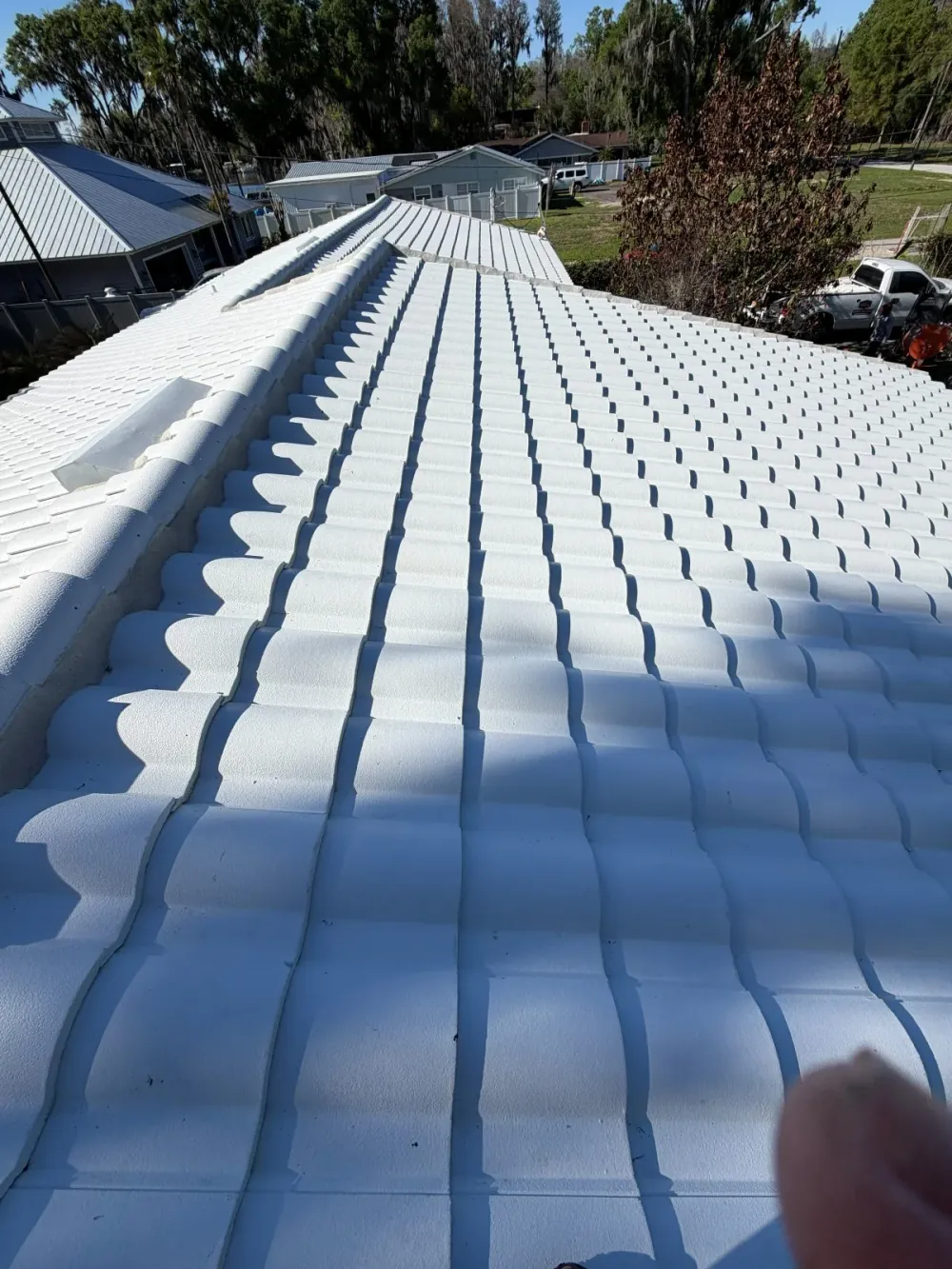
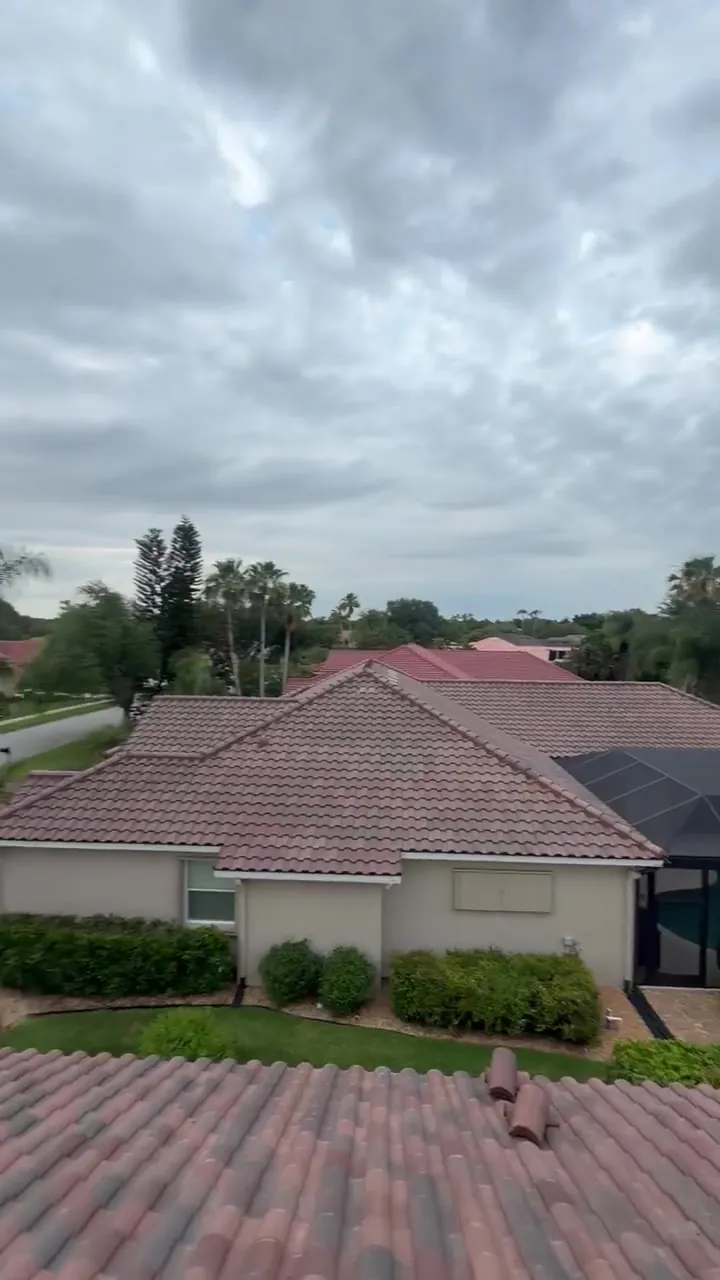
S-Tile Roof Restoration
Sarasota, FL
Tile Roofing Click to expand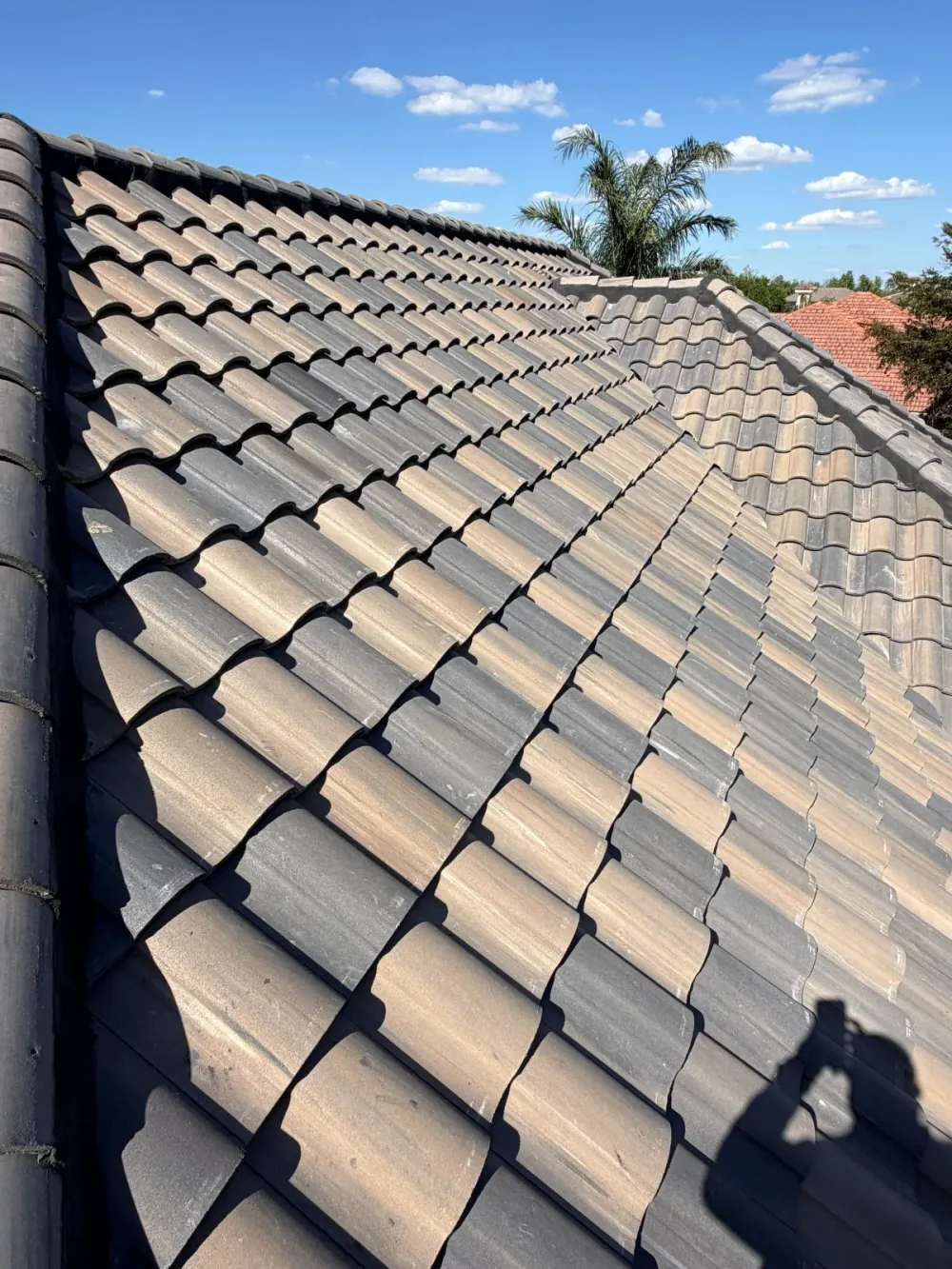
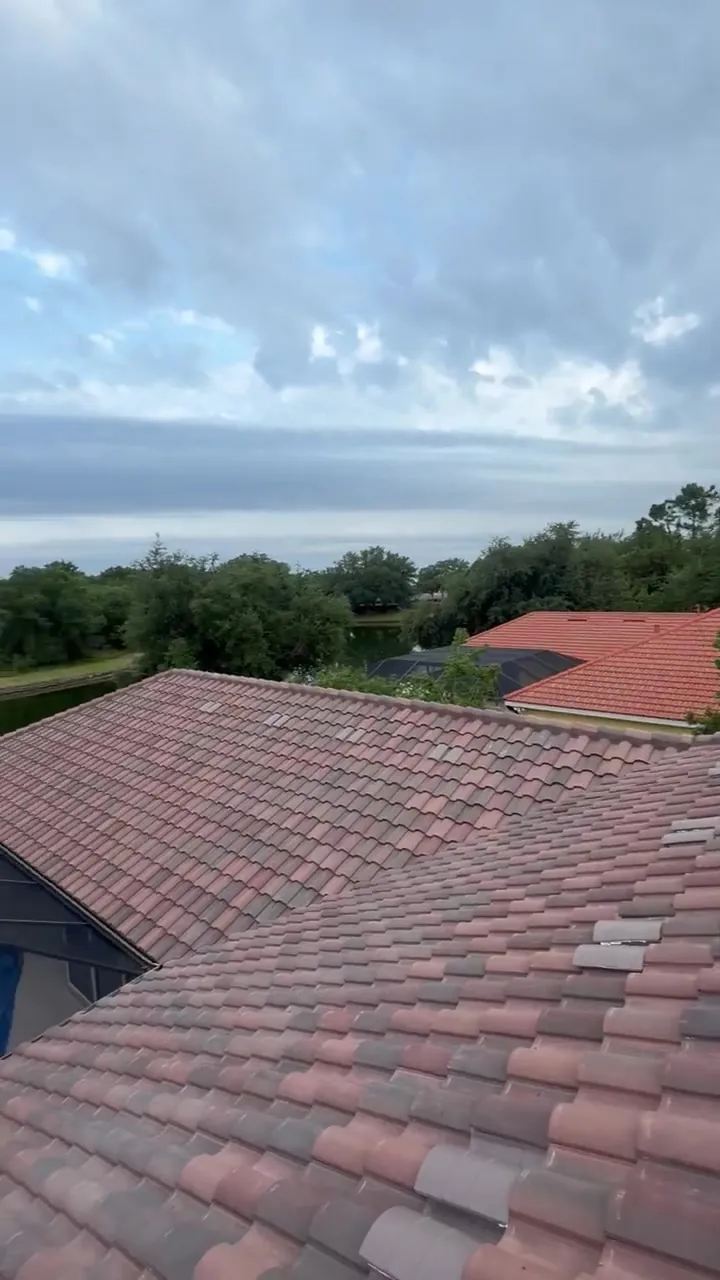
Concrete Barrel Tile Installation
Lakewood Ranch, FL
Tile Roofing Click to expand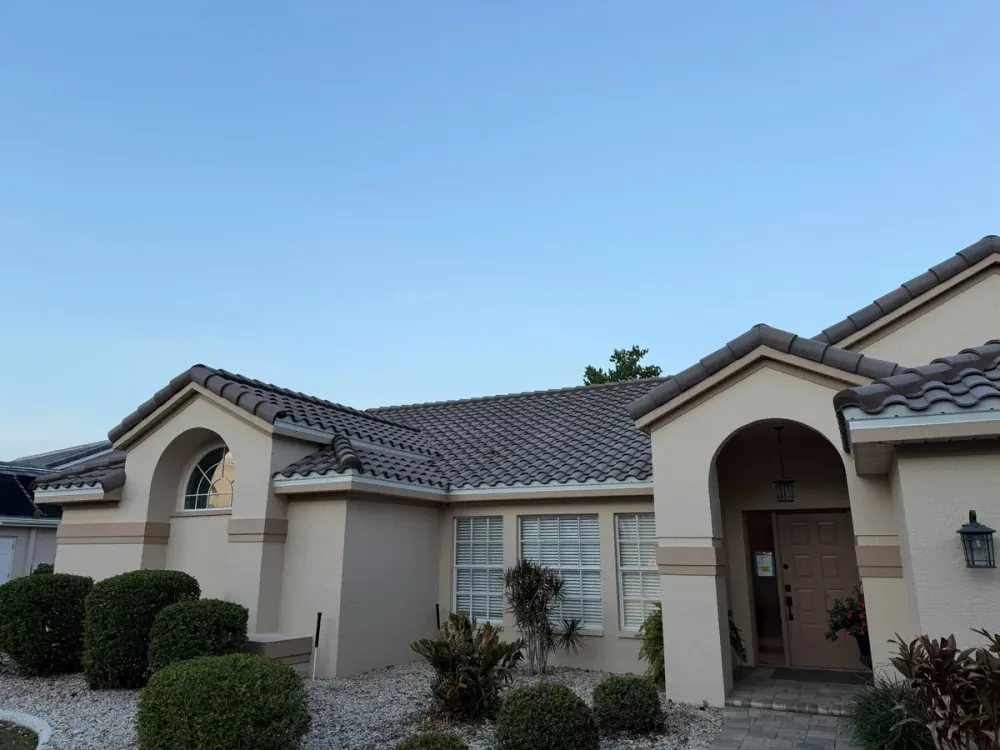
Tile Roof Replacement
Sarasota, FL
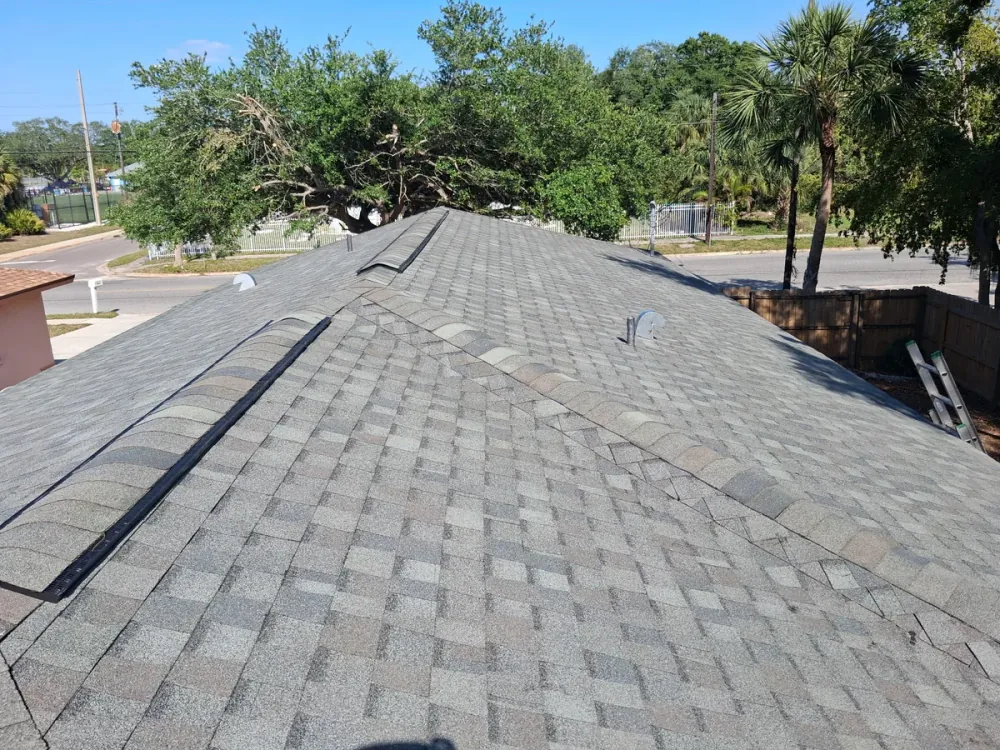
Tile Roofing Click to expand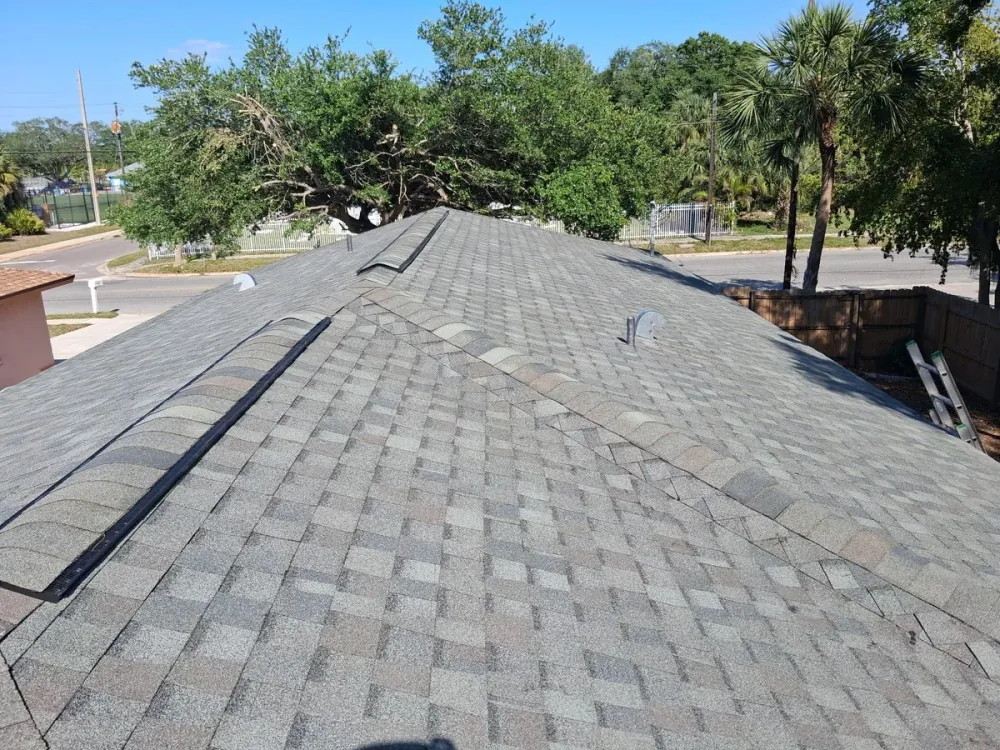
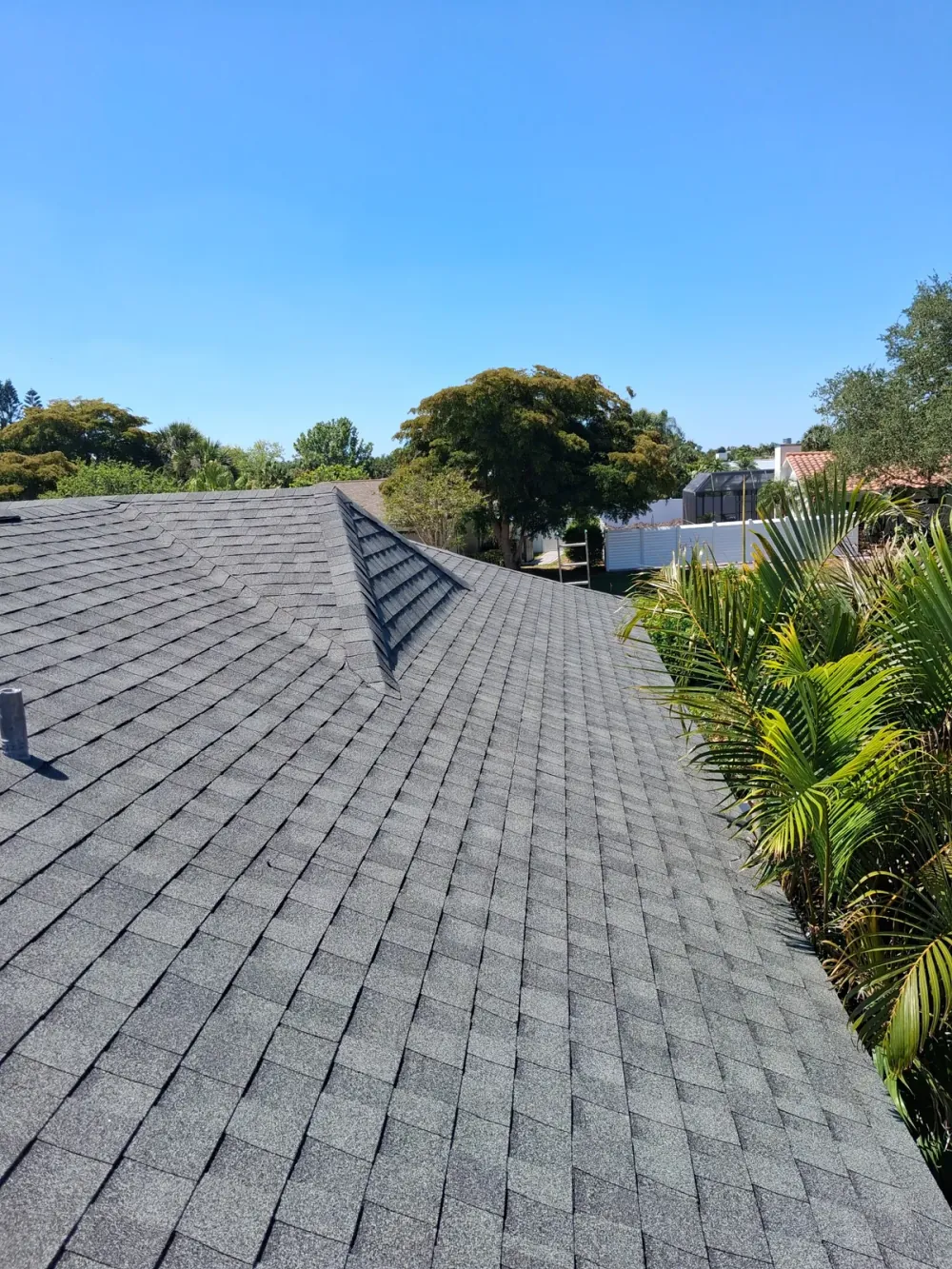
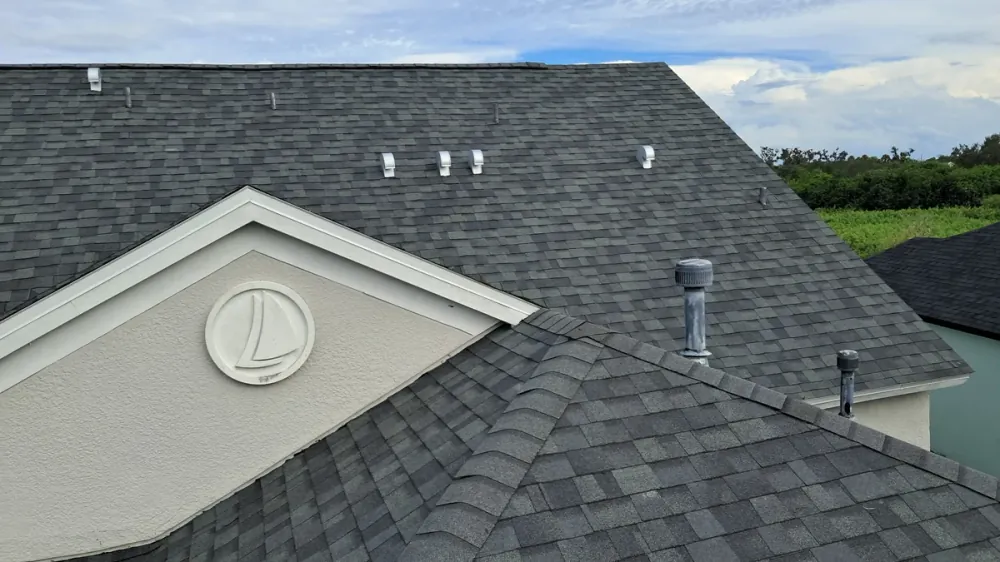
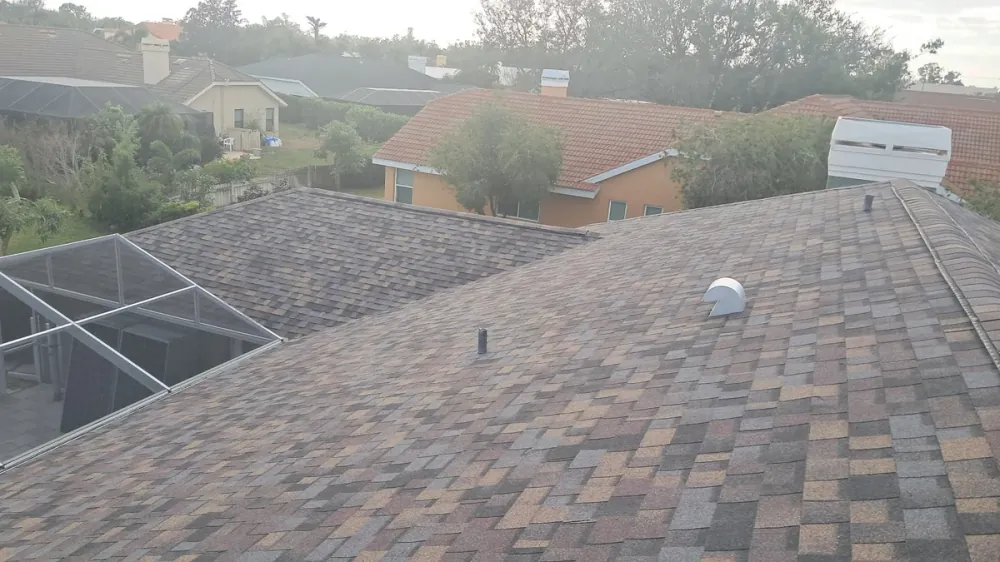
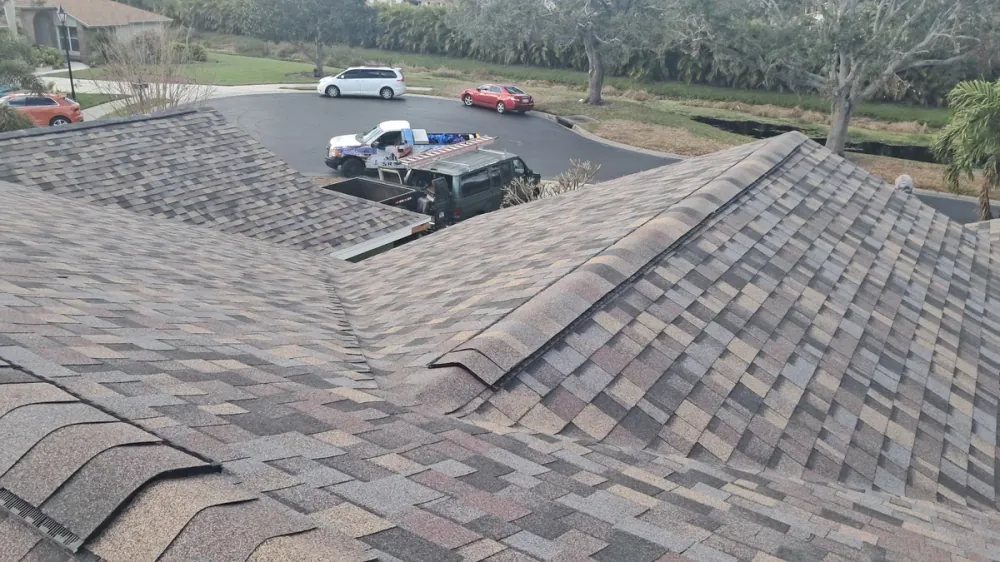
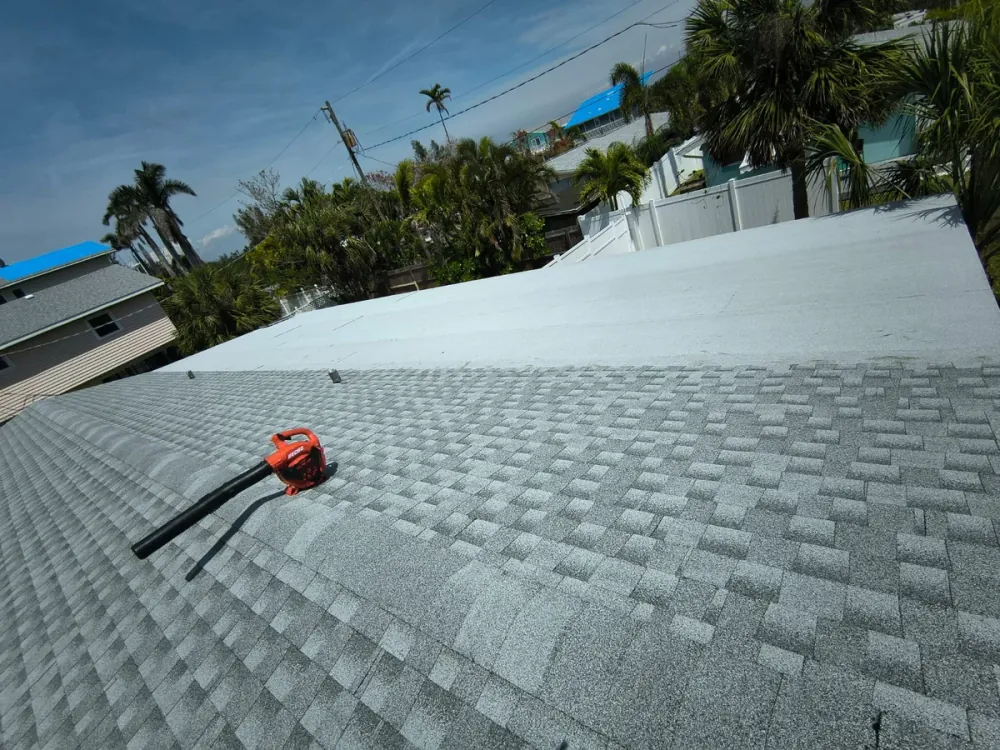
Architectural Shingle Roof
Sarasota, FL
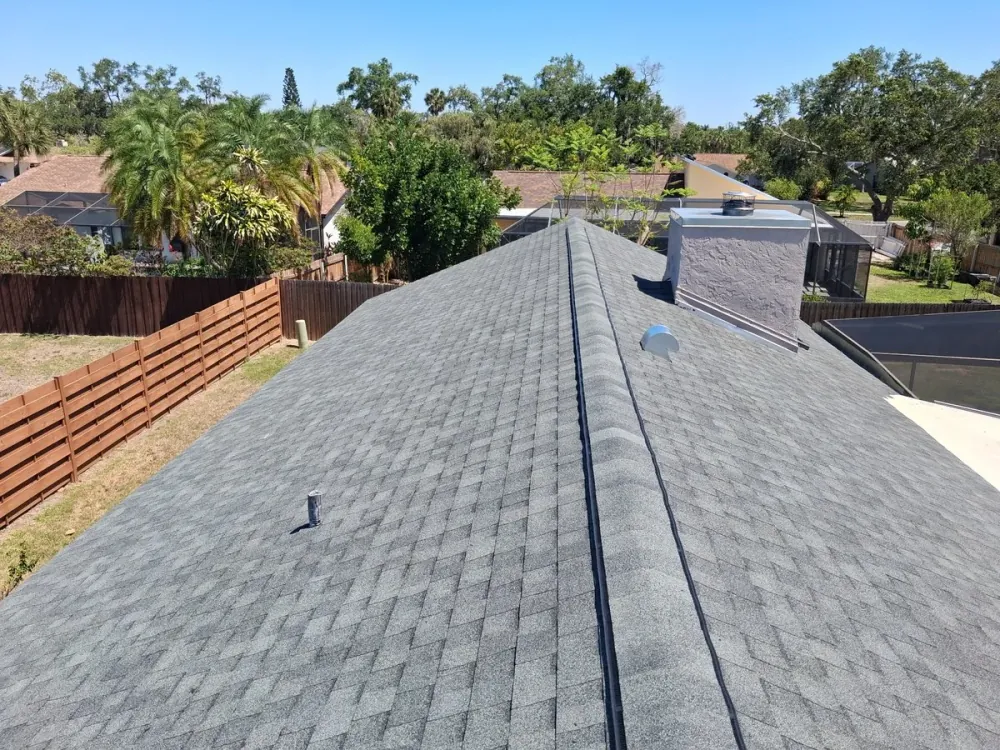
Shingle Roofing Click to expand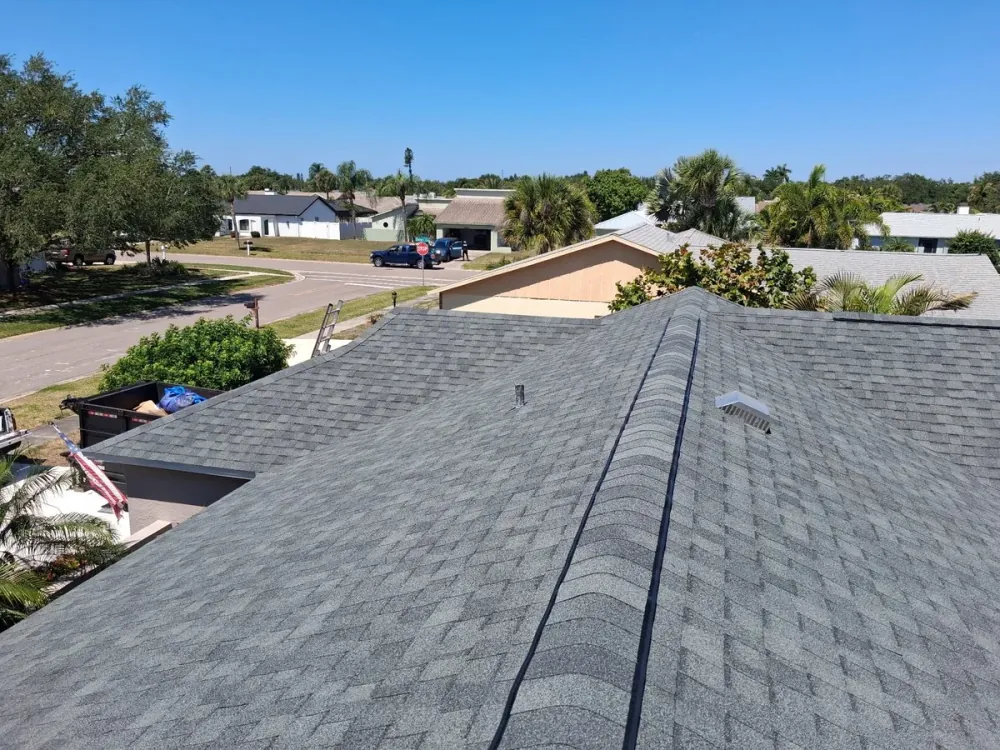
No projects found for this filter.
FAQ
Frequently Asked Questions
What are signs a commercial roof needs repair or replacement?
Common signs include water intrusion, pooling water after rain, visible membrane cracks or blistering, increasing energy bills (poor insulation), sagging sections, and frequent leak calls from tenants. If you're repairing the same area repeatedly, replacement is usually more cost-effective.
Can you work around our business hours to minimize disruption?
Yes. We coordinate with building managers to schedule work around tenant operations. For 24-hour businesses, we can work nights or weekends — discuss your requirements at the estimate stage.
Is metal roofing a good choice for commercial buildings?
Metal roofing is excellent for most commercial buildings — it's durable, fire-resistant, energy-efficient, and can last 50–80 years. It handles Florida's UV exposure and storm season well. It costs more upfront than TPO but typically has a lower total cost of ownership.
What types of commercial roofing systems do you install?
We install TPO (single-ply membrane), EPDM, modified bitumen, metal systems, and built-up roofing (BUR). The right system depends on your building type, slope, budget, and how long you plan to own the property.
Schedule a Commercial Roof Assessment
Free inspection. We'll tell you honestly whether repair or full replacement is the more cost-effective path for your building.