What a Roof Inspection Near Me Actually Covers in Sarasota, FL
When you search for "roof inspection near me" in Sarasota or Manatee County, you're probably worried about one of three things: your insurance company is requiring proof of roof condition, your HOA sent a notice, or you spotted something that doesn't look right after a storm. A professional roof inspection is a comprehensive evaluation — not just a free estimate from a roofer. It covers the exterior (shingles, flashing, gutters), the interior (attic, signs of leaks or mold), and structural integrity (decking, trusses). In Florida's intense heat, humidity, and hurricane season, inspectors pay special attention to damage from UV radiation, high winds, and wind-driven rain. This guide walks you through exactly what roof inspection services include, why the final report matters for your wallet and compliance, and how to tell the difference between a casual estimate and a documentation-grade inspection.
Questions This Guide Answers
- What specific exterior, interior, and structural elements do professional roof inspectors examine during a full assessment?
- How do Florida's climate conditions — heat, humidity, hurricanes — change what inspectors prioritize in Sarasota and Manatee County?
- Why does the inspection report matter for homeowners insurance renewals, HOA compliance, and repair budgeting?
Key Findings
- A professional roof inspection covers three layers: exterior (shingles, flashing, gutters), interior (attic, ceilings, signs of water intrusion), and structural (decking, trusses, fasteners).
- Florida inspectors focus on UV damage, missing or cracked shingles, failing flashing, and signs of wind-driven rain entry — issues that accelerate in Sarasota's climate.
- The inspection report is a critical document for insurance eligibility and renewals; many Florida insurers now require proof of roof condition and remaining lifespan before coverage.
- For HOAs and property managers, regular inspections ensure compliance with Florida statutes that can mandate full roof replacement if over 25% is damaged.
- Standard inspections cost $100–$250; advanced inspections using drones or infrared imaging cost $200–$700.
This guide combines research into Florida building codes, HOA statutes, and insurance requirements specific to Sarasota and Manatee County with professional roofing inspection standards. Data on inspection frequency, costs, and climate-specific concerns come from industry recommendations for Florida homeowners and property managers. The framework reflects what certified roof inspectors actually examine, why each element matters in Florida's harsh climate, and how the final report influences insurance, HOA compliance, and repair decisions.
Think of a roof inspection as a health checkup for your home. Just as a doctor checks your blood pressure, heart, and lungs to catch problems before they become emergencies, a roof inspector examines the exterior (the skin), the interior (the organs), and the structure (the skeleton) to find leaks, rot, and wear before they threaten the whole house. The inspection report is your medical chart — insurance carriers and HOAs use it to assess risk, the same way a doctor's records inform a health insurer's decisions.
1. What Roof Inspection Near Me Actually Means: Beyond the Free Estimate
Most people who type "roof inspection near me" into Google expect the same thing they'd get from a contractor knocking on their door after a storm: someone climbs up, looks around briefly, and hands over a quote. That's a free estimate, and it has its place — but it is not the same product as a paid, comprehensive roof inspection, and confusing the two can cost you when it matters most.
A free estimate is sales-oriented. The person on your roof works for a company that wants to sell you a repair or a replacement, and the "inspection" is really a lead-generation step. A paid inspection, by contrast, is third-party documentation. It's built to hold weight with an insurance underwriter, an HOA compliance committee, or a mortgage lender — audiences that don't care about a sales pitch and want a neutral, defensible assessment.
What makes an inspection "comprehensive" is the three-layer structure: exterior, interior, and structural. A properly documented roof inspection also includes detailed photography of every defect found, a written report with repair recommendations and rough cost estimates, an estimate of the roof's current age and remaining lifespan, and a severity rating for each issue so you know what's urgent and what can wait. In Florida, the people qualified to perform this work may be licensed roofers, structural engineers, or certified home inspectors who've completed specific roof assessment training — credentials worth asking about before you book.
- A free estimate is sales-oriented; a paid inspection is third-party documentation that holds weight with insurance and HOA boards.
- Inspection reports include roof age estimation, remaining lifespan prediction, defect severity ratings, and prioritized repair lists.
- Licensed inspectors in Florida may be roofers, engineers, or certified home inspectors with specific training in roof assessment.
- The final report becomes part of your home's permanent record and can be used for insurance claims, refinancing, or HOA compliance proof.
2. The Exterior Inspection: What Inspectors Look for on Your Roof Surface

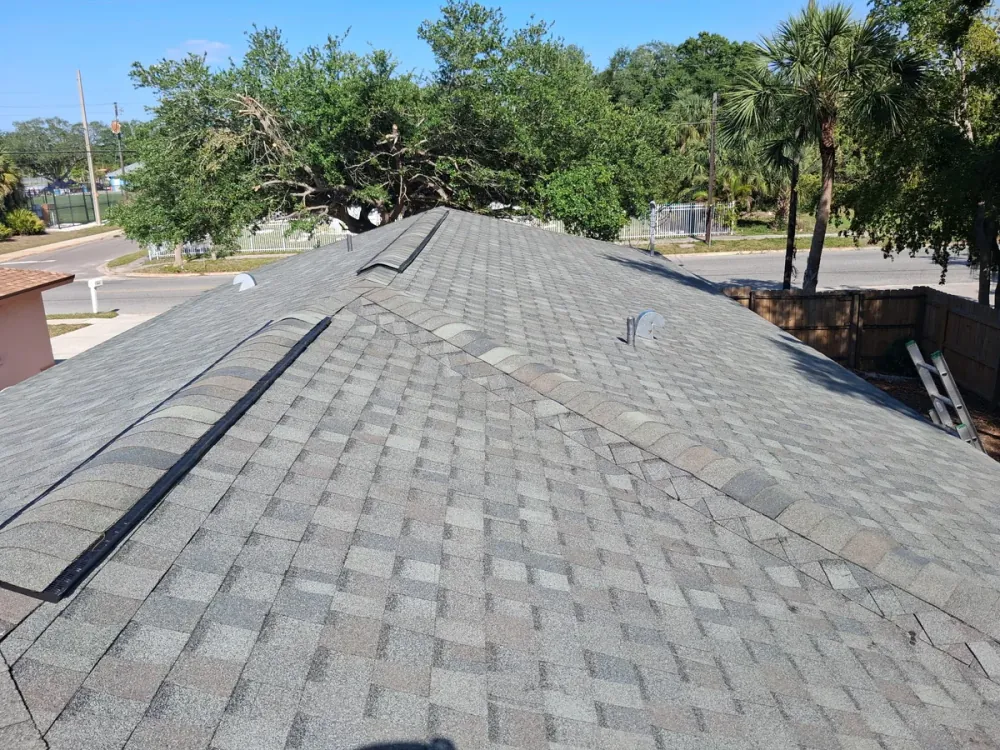
The exterior is where inspectors spend the most time, because it's the first line of defense against Sarasota's sun and storms. They start with the shingles or tiles themselves, looking for missing pieces, cracking, curling edges, or lifting — all signs that the roofing material is losing its ability to shed water. Just as important is granule loss and UV fading, which are especially common in South Florida given the year-round intensity of the sun. Inspectors use the degree of granule loss to estimate how much useful life a shingle roof has left.
Flashing gets close attention next. These are the metal strips installed where the roof meets a wall, around vent pipes, chimneys, skylights, and in roof valleys — anywhere two surfaces meet and water naturally wants to find a gap. Flashing failures account for about 80% of roof leaks, so inspectors check carefully for rust, gaps, and installation errors that wouldn't be obvious from the ground.
Gutters and downspouts come next. Blockages, sagging, rust spots, or separation from the fascia all prevent proper drainage, which leads to pooling water and, eventually, leaks at the roofline. In Florida's humid climate, gutters clogged with leaves and debris trap moisture against the roof edge and accelerate decay — keeping them clean is one of the simplest maintenance habits a homeowner can adopt.
Finally, inspectors examine the smaller details: the nails, screws, and sealants around every roof penetration. Wind-driven rain can find its way through even small gaps, so inspectors look specifically for sealant that has cracked, shrunk, or pulled away due to Florida's constant cycle of intense heat and sudden rain.
- UV damage and granule loss are especially common in South Florida's year-round intense sun; inspectors estimate remaining shingle life based on this.
- Flashing failures account for about 80% of roof leaks; inspectors check for gaps, rust, and improper installation.
- Gutters clogged with debris trap moisture and accelerate roof decay; clean gutters are a maintenance must-have in Florida's humid climate.
- Wind-driven rain can penetrate even small gaps; inspectors look for sealant deterioration around penetrations and fasteners.
If your roof has already taken a hit from a recent storm, it's worth reading up on common storm damage roof repair issues in Sarasota before the next inspection, so you know what to flag.
3. The Interior Inspection and Attic Assessment: Signs of Water Intrusion and Structural Issues

The exterior tells inspectors what's happening on the surface, but the attic tells them what's actually happening underneath — and that's often where the real story is. Inspectors climb into the attic looking first for water stains and discoloration on decking, joists, and trusses, which point to past or ongoing leaks around roof penetrations. Not every stain means an active problem; part of the inspector's job is determining whether a stain is old and already resolved, or fresh and still leaking.
Mold and moisture assessment comes next, and it's a particularly important step given Florida's humidity. Inspectors look for soft spots in the decking, discoloration patterns, and any visible fungal growth. Mold in the attic is a red flag for insurance carriers specifically — some will require remediation before they'll renew a policy, regardless of the roof's age.
From there, inspectors check structural integrity: rot, insect damage, sagging decking, or compromised truss connections that weaken the roof's ability to carry load. Decking rot from prolonged moisture exposure is one of the most serious findings an inspector can report, because it often compromises the entire roof structure and pushes the recommendation from "repair" to "replace."
Ventilation and insulation round out the interior assessment. Proper attic airflow keeps moisture and heat from building up, which extends the life of the roofing materials above; without it, roofs in Florida's climate fail years earlier than expected. Inadequate or damaged insulation is a related concern — it reduces energy efficiency and can allow condensation to form, which over time leads to the same mold and decay problems inspectors are already watching for.
- Water stains may not be fresh; inspectors determine age and whether the leak source has been repaired or still poses a risk.
- Mold in the attic is a red flag for insurance carriers; remediation may be required before coverage renews.
- Florida's heat and humidity demand proper attic ventilation; without it, roofs fail years earlier than expected.
- Decking rot from prolonged moisture exposure can compromise the entire roof structure; this discovery often triggers full replacement recommendations.
4. Why Roof Inspection Services Run Twice a Year in Florida: Climate-Specific Threats
One inspection a year is the bare minimum most experts recommend anywhere in the country. In Sarasota and Manatee County, though, two inspections a year aligned with hurricane season give you a much clearer picture of your roof's condition and a realistic repair timeline. The first happens in May, before peak wind season, and its purpose is to identify vulnerabilities — loose flashing, undersized fasteners, aging sealant — while there's still time to fix them before a storm tests every weak point at once.
The second inspection happens in November, after the season's storms have passed. This one is about documentation as much as prevention: it assesses whatever damage accumulated over the summer and fall, and it gives you a written record you can hand to an insurance adjuster if a claim becomes necessary. Damage from wind, rain, and flying debris isn't always visible right away — a lifted shingle or a hairline crack in flashing can sit quietly for months before it turns into an active leak, which is exactly why the post-storm check matters even if nothing looks obviously wrong.
Roof age changes the calculus too. Roofs over 15 years old face accelerated wear from Florida's UV exposure, heat, and humidity cycling, and twice-yearly inspections catch problems in these older roofs before they become emergencies. Many insurance policies and HOA rules now build this expectation directly into their requirements — regular inspections aren't just good practice, they're increasingly a condition of staying insured or staying in compliance.
- One inspection per year is the bare minimum; two align with Florida's hurricane season and give you a clear repair timeline.
- Roofs over 15 years old may require insurance-mandated inspections twice yearly to assess remaining life and continued insurability.
- Post-storm inspections capture wind, rain, and debris damage that isn't always visible immediately but can lead to leaks months later.
- Regular inspections can prevent emergency repairs by catching small issues before they escalate into costly structural damage.
5. Inspection Report: Cost, Comparison, and What Makes It Valuable for Insurance and HOA
Cost is usually the first question homeowners ask, and it's a fair one. A standard visual roof inspection typically runs $100–$250, and it's the right choice for routine maintenance checks, insurance updates, and HOA compliance documentation. Advanced inspections — using drones or infrared imaging to spot hidden moisture and hard-to-reach damage — run $200–$700 and are worth the extra cost when a roof is difficult to access or already shows signs of problems that a visual walk-through can't fully explain.
| Inspection Type | Minimum Cost | Maximum Cost |
|---|---|---|
| Standard Visual Inspection | $100 | $250 |
| Advanced (Drone/Infrared) | $200 | $700 |
What you get for that money is what matters most: a written summary, defect photos, an estimate of roof age and remaining lifespan, severity ratings for each issue found, a prioritized repair list with rough cost estimates, and any recommendations relevant to HOA or insurance requirements. Compare that to a free estimate, which is really just a contractor's sales proposal — informal, verbal, and built to close a job rather than to document a condition for a third party.
That distinction is exactly why insurance carriers rely on inspection reports the way they do. Carriers use them to decide whether to renew a policy, how to price the premium, and — in the worst case — whether to deny a claim because the damage was documented as pre-existing. A detailed report protects you here: it proves what condition the roof was in before a storm, which matters enormously if you file a claim afterward and need to show the damage wasn't already there.
HOA boards and property managers rely on the same documentation, just for a different purpose. Community boards often require inspections every 3–5 years or immediately after a significant weather event, and the resulting report either proves a homeowner is compliant with community roofing standards or triggers a mandatory repair timeline. In some cases, one inspection report can prompt a broader compliance review across an entire community, particularly if a board is trying to get ahead of liability concerns.
- Standard inspections are adequate for routine checks and insurance updates; advanced inspections are worth the extra cost if your roof is difficult to access or shows signs of hidden damage.
- A detailed report protects you: it documents pre-existing damage and proves you didn't cause wear and tear, which is crucial if you later file a claim.
- Many insurance carriers in Florida now require annual inspection proof or raise premiums significantly; a $150 inspection saves thousands in denied claims or coverage loss.
- HOA boards rely on inspection reports to enforce community roofing standards and avoid liability; your report may trigger neighborhood-wide compliance reviews.
6. Roof Age, Lifespan Estimation, and When Inspection Findings Trigger Replacement vs. Repair
Roofing materials simply don't last as long in Florida as they do in cooler, drier climates, and any inspection findings need to be read against that reality. Asphalt shingles typically last 15–20 years here, metal roofing runs 25–40 years, and clay or concrete tile can reach 20–40 years — all shorter windows than the benchmarks you'll see quoted for northern states, thanks to constant UV exposure and humidity cycling.
Once a roof crosses the 15-year mark, inspection findings start to carry more weight. Accelerated deterioration at this age is common enough that inspectors typically recommend more frequent checks, and the report often shifts from routine maintenance notes to a genuine repair-versus-replace decision. That decision isn't based on age alone — it's based on condition. A roof nearing the upper end of its expected lifespan but still in good shape can often still be repaired; a much younger roof with widespread flashing failure and soft decking may already be past the point where repair makes financial sense.
Florida statutes and many insurance policies draw a hard line at 25% damage: cross that threshold, and full replacement is often mandated rather than optional. Part of the inspector's job in these cases is estimating the roof's remaining useful life and laying out a clear cost-benefit case for repair versus replacement, so the homeowner isn't guessing.
Consider what happened to Maria, a Sarasota homeowner who ignored her HOA's roof inspection notices for two years. When she finally scheduled one, with her roof at 18 years old, the inspector found granule loss, failing flashing, and soft decking in the attic — textbook signs of accelerated UV and moisture damage. The $150 inspection report documented 40% damage and triggered her insurer's 90-day notice to replace the roof or lose coverage. She ended up spending $12,000 on an emergency replacement instead of the $200–$400 a year she would have paid for regular inspections — inspections that might have extended the roof's life or at least allowed her to plan and finance the work on her own terms. The one thing that saved her from a denied claim was that the inspection had been completed before the cancellation notice arrived, giving her documented proof of the damage.
- Florida's harsh climate cuts 5–10 years off typical roof lifespan compared to cooler regions; age alone doesn't determine replacement need — condition does.
- Roofs over 25% damaged may not be insurable under standard policies; inspections catch this before renewal denial.
- An inspection at year 15 is an investment that clarifies your budget: if replacement is inevitable, you can plan and finance it proactively.
- Insurance carriers often use roof age and condition to justify premium hikes or cancellations; an inspection report with clear findings protects your renewability.
What This Means for Homeowners, HOAs, and Insurers
- Homeowners: Scheduling roof inspection services annually — ideally twice yearly before and after hurricane season — protects insurance eligibility, prevents emergency repairs, and documents proof of maintenance for HOA or lender requirements.
- HOA Boards and Property Managers: Regular inspections ensure community compliance with Florida statutes, prevent liability from neglected common-area roofing, and provide documentation that justifies reserve fund budgets and special assessments for repairs or replacement.
- Insurance Carriers and Lenders: Inspection reports become underwriting documents that inform renewal decisions, premium pricing, and whether to accept or deny coverage — making a paid inspection a critical compliance touchpoint for Sarasota and Manatee County homeowners.
Keep Learning
- Storm Damage Roof Repair Near Me: Sarasota & Manatee County Homeowner's Guide — After an inspection reveals wind or weather damage, learn how to navigate the repair process, work with insurance adjusters, and prioritize urgent fixes in your area.
- Top Roofers Near Me in Sarasota & Manatee County: How to Vet Local Contractors — Once you have an inspection report, use this guide to find and vet licensed, insured roofers who understand Sarasota and Manatee County's local codes and climate challenges.
Frequently Asked Questions
How much does a roof inspection near me typically cost in Sarasota?
A standard visual inspection runs $100–$250 and covers the exterior, interior, and structural checkpoints most insurers and HOAs require. Advanced inspections using drones or infrared imaging cost $200–$700 and are useful for hard-to-access roofs or when hidden moisture is suspected.
Is a free roofer estimate the same as a paid roof inspection?
No. A free estimate is a sales tool meant to lead to a repair or replacement job, usually with a verbal summary. A paid inspection produces a written, photo-documented report that carries weight with insurance carriers and HOA boards.
How often should I schedule roof inspection services in Florida?
Most experts recommend at least once a year, but twice a year is better in Sarasota and Manatee County — once in May before hurricane season and once in November after it, to catch storm damage before it turns into a hidden leak.
Will my insurance company accept a roof inspection report as proof of condition?
Yes, in fact many Florida carriers now require one for renewal, especially for roofs over 10–15 years old. A written report with photos and a defect severity rating is exactly the kind of documentation underwriters ask for.
What happens if my roof inspection finds more than 25% damage?
Florida statutes and many insurance policies treat 25% damage as a threshold that often mandates full replacement rather than spot repairs. Your inspector's report will document the extent of the damage and support any insurance claim tied to the replacement.