Siding Companies Near Me in Sarasota & Manatee County: Your Complete Guide
When you search for siding companies near me in Sarasota or Manatee County, you're not just looking for someone to nail boards to your house. You're hiring a specialized team to protect your home's structural integrity against one of the harshest climates in America. This guide walks you through exactly what professional siding installation and replacement involves—from material selection to the final walkthrough—so you know what to expect, how to prepare, and why it matters for your home's value and durability.
Most homeowners who start this search have no idea what the actual work involves, or which materials will survive Florida's humidity, salt air, and hurricane-force winds. That gap in knowledge costs money and leads to rushed decisions. Understanding the process and the material science before you pick up the phone puts you back in control, and it positions siding replacement as one of the highest-ROI improvements a Florida homeowner can make.
Three Questions Every Homeowner Asks Before Calling a Contractor
- What siding material actually withstands Florida's salt air, humidity, and hurricane winds?
- How does a professional siding replacement unfold, step by step, and what should I prepare?
- Will replacing my siding increase my home's resale value in Florida?
Here's what the data and the day-to-day realities of a siding job actually show:
- Fiber cement siding delivers the highest ROI at resale (113.7% nationally) and is engineered specifically for coastal Florida's moisture and wind challenges.
- Vinyl siding is a solid alternative, recouping 96.5% of cost at resale, but offers less salt resistance than fiber cement in high-corrosion zones.
- A professional siding replacement follows a clear sequence: old siding removal → wall inspection and repair → weather-resistive barrier installation → new siding and trim placement → final inspection and cleanup.
- Strong curb appeal—including quality new siding—can add 7% to your home's resale value compared to worn exteriors.
- Homeowners who prepare their property and communicate clearly with the project supervisor experience smoother, faster projects.
This guide synthesizes data from the 2025 Zonda Cost vs. Value Report, industry research on siding materials and their performance in humid coastal climates, and step-by-step process documentation from professional siding contractors in Sarasota and Manatee County. We prioritize verifiable ROI data, real-world installation sequences, and material science relevant to Florida's specific weather and environmental challenges. All information is tailored to help homeowners, HOA board members, and property managers make informed decisions before calling siding companies near them.
1. Why Siding Companies Near Me Matter: Choosing Materials Built for Florida's Climate
Ask any experienced siding contractor in Sarasota what separates a project that lasts 30 years from one that fails in 10, and the answer almost always comes down to material choice. Fiber cement siding—products like James Hardie's HZ10 line—is engineered specifically for humid, coastal climates. It resists moisture penetration, won't rot, doesn't attract termites, and holds up against the salt spray that rolls in off Sarasota Bay and the Gulf of Mexico. For homes exposed to hurricane-force winds, fiber cement's density and fastening systems also perform better than lighter alternatives.
Vinyl siding remains a legitimate option, especially for homes further inland. It costs less upfront, installs faster, and modern UV-resistant formulations from brands like Alside or CertainTeed resist fading reasonably well. The tradeoff is salt resistance: vinyl in heavy salt-spray zones degrades faster than fiber cement, and homeowners near the water should expect more frequent rinsing and earlier replacement cycles.
Wood and aluminum, by contrast, are poor fits for this region. Wood soaks up humidity, invites termites, and demands repainting every few years just to stay presentable. Aluminum corrodes faster in salt air than either modern option and has largely fallen out of favor for new installations. If a contractor proposes either material for a coastal Sarasota or Manatee County home without a very specific reason, that's worth questioning.
| Material Type | ROI at Resale | Florida Climate Fit | Maintenance Level |
|---|---|---|---|
A few practical notes worth keeping in mind as you compare options:
- Fiber cement typically costs 20–30% more upfront than vinyl, but recouped cost at resale and its 20–30 year lifespan justify the investment.
- High-quality vinyl from brands like Alside or CertainTeed offers UV protection and improved salt resistance; avoid budget vinyl in coastal zones.
- If your home is within 1 mile of saltwater, fiber cement is strongly recommended; vinyl may face accelerated corrosion.
- All materials require proper installation of an underlayment weather-resistive barrier—this step is as critical as the siding itself.
These material tradeoffs connect directly to how your home weathers storms. For a deeper look at how wind and water damage expose weak points across a home's exterior, see our guide on hurricane-resistant exterior upgrades.
2. The Step-by-Step Siding Installation Process: What to Expect from Day One
A professional siding installation isn't a one-day swap—it's a sequenced project with distinct phases, each of which protects the next. Understanding the order helps you anticipate noise, mess, and the occasional surprise that comes with opening up a 20-year-old wall.
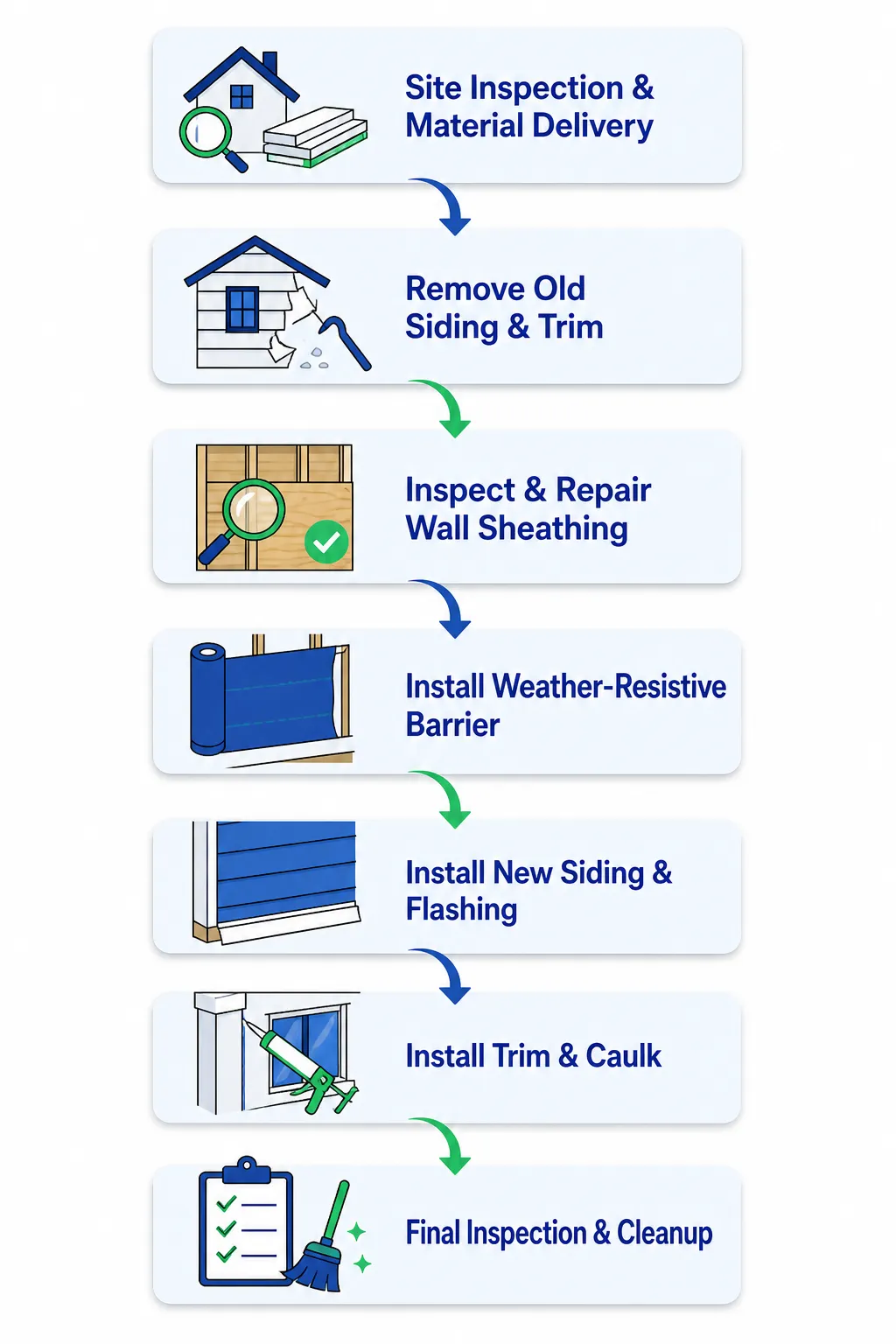
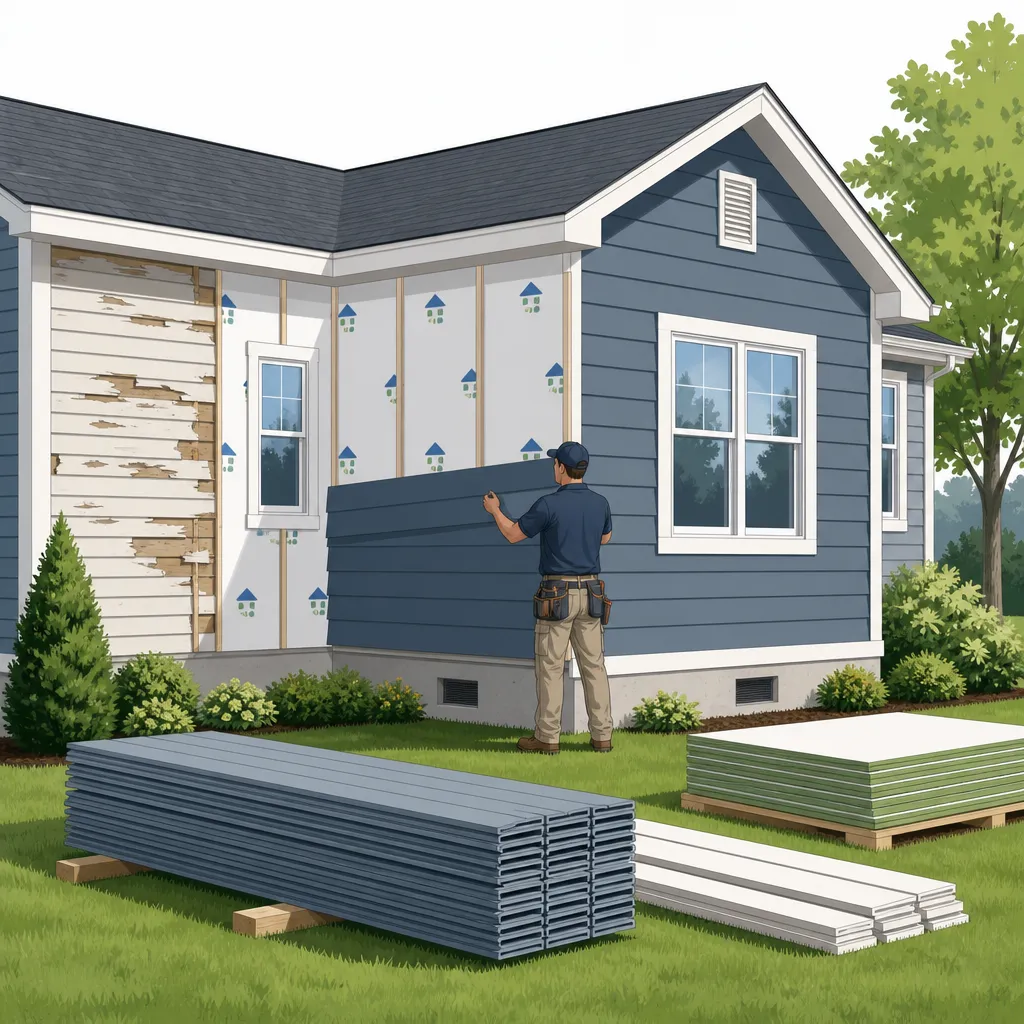
The pre-project phase starts with a site visit where the contractor measures your exterior, finalizes material orders, and coordinates delivery. This is also when you'll get a homeowner preparation checklist—more on that in Section 5. Once materials arrive, the crew typically spends the first day or two removing the old siding and trim. Expect noise and vibration throughout the house during this stage; it's loud, physical work, and it's normal.
With the old siding off, the crew inspects the wall sheathing underneath—this is often the most important moment of the entire project. Rot, mold, and termite damage hide behind siding for years without visible symptoms, and this is the only point where a contractor can see and fix those issues before sealing everything back up. Next comes installation of the weather-resistive barrier (WRB) and house wrap, a layer most homeowners never think about but one that determines whether water intrusion becomes a problem five years down the line.
From there, new siding goes up—generally from bottom to top, with careful attention to alignment and fastening patterns specific to the chosen material. Trim, flashing, and caulking around windows, doors, and corners typically wrap up in the final day or two, followed by a walkthrough where the contractor reviews workmanship with you, cleans the site, and hands off warranty documentation.
A few things to keep in mind as the project unfolds:
- Vibration during removal can dislodge pictures and items on interior walls; secure or remove them in advance.
- Wall inspection sometimes reveals mold or termite damage requiring immediate remediation—budget for this contingency.
- Proper underlayment installation is non-negotiable; it protects against water infiltration that can cause structural damage.
- Weather delays are normal in Florida; projects may extend if rain halts work or if hidden damage emerges.
- A reputable contractor will provide daily updates and establish a single point of contact for your questions.
Think of siding like a raincoat, and the weather-resistive barrier underneath like the lining. A fancy raincoat with no lining will still leak; poor underlayment paired with premium siding will still fail. Both layers have to work together, which is exactly why contractors who skip or skimp on underlayment installation are cutting corners on structural protection—no matter how good the exterior looks on day one.
Preparing for a contractor's arrival matters more than most homeowners realize. Our guide on how to prepare your property for contractor work covers steps that apply directly to siding projects, and our breakdown of vetting local contractors in Sarasota and Manatee County will help you ask the right questions before signing anything.
3. Siding Replacement ROI and Curb Appeal: Why This Investment Pays Off in Florida
Few home improvement projects pay for themselves as reliably as siding replacement. According to the 2025 Zonda Cost vs. Value Report, fiber cement siding recoups 113.7% of its cost at resale—the highest return among exterior remodeling projects nationally. Vinyl siding, while not as strong a performer, still recovers 96.5% of cost, which puts both materials well ahead of most other home improvement categories.
Strong curb appeal, which new siding contributes to directly, can add 7% to a home's resale value compared to a property with a worn or outdated exterior. In a competitive Florida real estate market, that first visual impression often determines whether a buyer schedules a showing at all—and it shapes how much scrutiny the rest of the home receives during inspection. New fiber cement siding signals structural integrity before a buyer ever steps through the front door, which reduces the kind of inspection contingencies that can derail a sale or trigger last-minute price negotiations.
There's also a durability argument that goes beyond aesthetics. Fiber cement siding is typically rated for a 25–30 year lifespan, meaning a buyer purchasing a home with recently installed siding won't be facing that expense for decades. Modern siding systems, paired with proper underlayment, also improve thermal resistance—a meaningful factor in Florida, where cooling costs run high for most of the year. And because new siding eliminates the visible signs of rot, termite damage, or peeling paint that make buyers nervous, it removes an entire category of objection during negotiations.
On a median-priced Florida home, a fiber cement siding project in the $15,000–$25,000 range typically recoups $17,000–$28,000 at resale. Vinyl projects of similar scope recoup roughly $14,500–$24,000—still a strong return, just not quite as strong. The 7% curb appeal premium is also a conservative estimate; homes with newly sided exteriors paired with updated landscaping can command even higher premiums in competitive Sarasota and Manatee County markets. Siding replacement is one of the rare home projects that can justify its cost on resale value alone, separate entirely from the comfort and protection benefits homeowners enjoy while living there.
Here's a real example of how this plays out. A Sarasota homeowner with 20-year-old vinyl siding in a coastal zone began noticing fading, salt spray staining, and soft spots that hinted at moisture penetration. A professional inspection uncovered minor mold in the wall sheathing—an unplanned $2,000–$3,000 repair. After the siding was removed and the wall remediated, the contractor installed fiber cement with premium underlayment, bringing the total project cost to $22,000. Three years later, the home sold for $18,000 more than comparable homes still carrying their original siding. The "hidden" wall damage, caught early during inspection, prevented a far larger structural failure that could have surfaced after the sale and sidelined the deal entirely.
4. How to Hire the Right Siding Companies Near Me: Red Flags and Best Practices
Once you understand the materials and the process, the next step is finding siding companies near me that will actually execute the job correctly. This is where most of the risk in a siding project lives—not in the materials themselves, but in the quality and honesty of the installation crew.
Start by verifying licensing. Florida roofing and siding contractors must hold a valid state license, and you can cross-check any contractor against the DBPR database before signing anything. Ask for references specific to Sarasota or Manatee County—local experience matters here, because contractors who work regularly in this region understand HOA rules, local permitting requirements, and the specific climate challenges your home faces. Confirm insurance and bonding as well: general liability, workers' compensation, and a surety bond should all be documented, not just promised verbally.
A detailed written estimate should include material specifications (named products, not vague categories), labor scope, a realistic timeline, and contingency allowances for unexpected wall damage. Warranty coverage deserves close attention too—manufacturer warranties cover material defects, while workmanship warranties cover the labor itself, and you want both in writing before work begins.
Finally, talk through logistics before the crew arrives: debris disposal, landscaping protection, parking for crew vehicles, and a communication plan with a single point of contact. Contractors who proactively raise these topics are usually the ones who've done this enough times to know where projects go wrong.
- Red flag: contractors who quote over the phone without an in-person inspection or push for immediate payment.
- Red flag: vague material specifications (e.g., "vinyl siding" without brand or grade) instead of named products like James Hardie HZ10.
- Green flag: contractors who proactively discuss weather-resistive barrier installation and wall inspection protocols.
- Green flag: references that include photos of completed projects and specific details about the homeowner's experience.
- Budget 10–20% contingency for unexpected wall damage or permit delays; transparent contractors discuss this risk upfront.
The same vetting principles apply whether you're hiring for siding or any other exterior work. Our guides on hiring contractors in Sarasota and Manatee County and local contractor vetting tips go deeper into questions worth asking before you sign a contract.
5. Preparing Your Home for Siding Installation: A Pre-Arrival Homeowner Checklist
A well-prepared property moves faster and runs into fewer complications. Before the crew shows up, clear a perimeter of at least three feet around your home—garden beds, mulch, and plants in that zone need to be relocated to make room for scaffolding and material staging. Inside, secure or remove pictures, mirrors, and wall-mounted items, since vibration during siding removal can shake them loose.
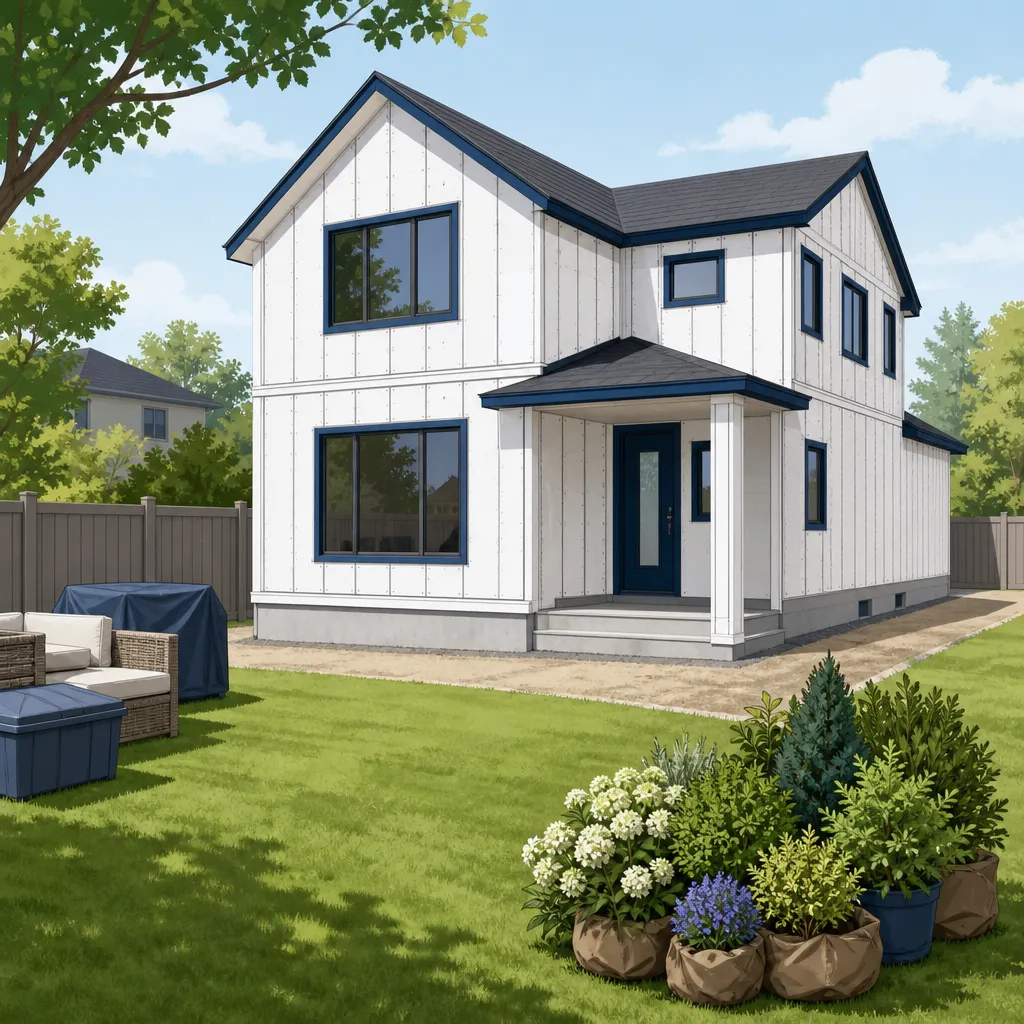
Make sure the crew can access every window and door without obstruction, and trim back any tree branches crowding the house. If you have a fence, clarify gate access with the supervisor ahead of time. Confirm where the crew will park and stage materials, and if you live in a dense neighborhood or HOA community, give neighbors a heads-up about the noise and activity—courtesy here prevents disputes down the line. Mark any outdoor outlets, AC units, or fixtures the crew needs to work around, and set clear rules for kids and pets on project days, since removal and installation generate noise, dust, and genuine hazards.
Before work begins, get the site supervisor's direct phone number and agree on a daily check-in time. This single step resolves more misunderstandings than almost anything else on this list.
- A cleared perimeter saves the crew 1–2 hours per day and reduces risk of damage to landscaping.
- Inform neighbors in advance, especially in dense HOA communities; courtesy prevents disputes over parking and noise.
- Create a "no-go zone" for family pets; construction sites are hazardous, and tools or materials can injure animals.
- Establish a clear point of contact; if the homeowner is unavailable during the day, designate a family member or neighbor.
- Discuss contingency communications in advance: what happens if weather delays the job or the crew discovers unexpected damage?
For a full walkthrough of what to do before any exterior contractor arrives, see our comprehensive pre-arrival preparation checklist—the principles translate directly from roofing to siding projects.
What This Means for Homeowners, HOA Boards, and Property Managers
- Siding is not a cosmetic luxury—it is structural protection. Material choice and installation quality directly impact your home's durability and resale value in Florida's harsh climate.
- Fiber cement offers the best long-term value for coastal properties; vinyl is viable in less corrosive areas but requires more frequent maintenance in salt zones.
- Pre-project preparation and clear communication with contractors reduce delays, surprises, and cost overruns.
- An investment in siding replacement can recoup over 100% of cost at resale (fiber cement) while extending your home's structural lifespan by 25–30 years.
- Local contractor experience and proper permitting (HOA approval, building permits) are non-negotiable in Sarasota and Manatee County.
Frequently Asked Questions
How long does a typical siding replacement take in Sarasota or Manatee County?
Most residential siding replacements take 1–3 weeks, depending on home size and whether the wall inspection reveals hidden damage. Weather delays, common during Florida's rainy season, can extend that timeline, so build in some flexibility when scheduling.
Is fiber cement siding worth the extra cost over vinyl?
In most coastal areas of Sarasota and Manatee County, yes. Fiber cement resists salt spray, moisture, and termites better than vinyl, and it recoups a higher percentage of its cost at resale (113.7% versus 96.5%). Homes further inland with lower salt exposure can reasonably choose quality vinyl instead.
Do I need HOA approval before replacing my siding?
Many HOAs in this region require pre-approval for siding material, color, and style before any work begins. Contact your HOA board before requesting contractor bids, and bring product specs and photos from your chosen brand to speed up the review.
What happens if the contractor finds mold or rot behind my old siding?
This is actually one of the most valuable parts of the process—catching hidden damage before it becomes a structural problem. Expect an additional cost for remediation, typically in the range of a few thousand dollars, and budget a 10–20% contingency into your project estimate to cover this possibility.
How do I verify that a siding contractor is properly licensed in Florida?
Cross-check the contractor's license number against Florida's DBPR database before signing any contract. Also confirm proof of general liability insurance, workers' compensation, and a surety bond—reputable contractors provide this documentation without hesitation.
Keep Learning
- Storm Damage Roof Repair Near Me: Sarasota & Manatee County Homeowner's Guide — After hurricane-force winds hit your siding, your roof is next. Learn how to assess and address storm damage to protect your entire exterior.
- Top Roofers Near Me in Sarasota & Manatee County: How to Vet Local Contractors — The same vetting principles for siding contractors apply to roofers. Use this guide to build a trusted local contractor network for all exterior work.
- Residential Roofers Near Me in Sarasota & Manatee County: What Sets Them Apart — Understand the difference between licensed contractors and true specialists. Local knowledge of HOA rules, permitting, and climate is invaluable for siding projects too.
- Roof Fixers Near Me: A Pre-Arrival Checklist for a Faster Fix — Adapt this pre-arrival preparation checklist for siding projects. Clearing your property and securing interior items applies to any exterior contractor job.